

Forging the Skyline: The Power and Precision of the Steel Roofing Machine
In the realm of modern construction, the roof is more than just a covering; it is a statement of durability, design, and efficiency. Behind the sleek metal roofs adorning contemporary homes, the robust cladding of industrial warehouses, and the weather-resistant shells of commercial complexes lies a pivotal piece of engineering: the Steel Roofing Machine. This sophisticated roll forming equipment has transformed the construction landscape by enabling the rapid, precise, and cost-effective production of metal roofing panels .
What is a Steel Roofing Machine?
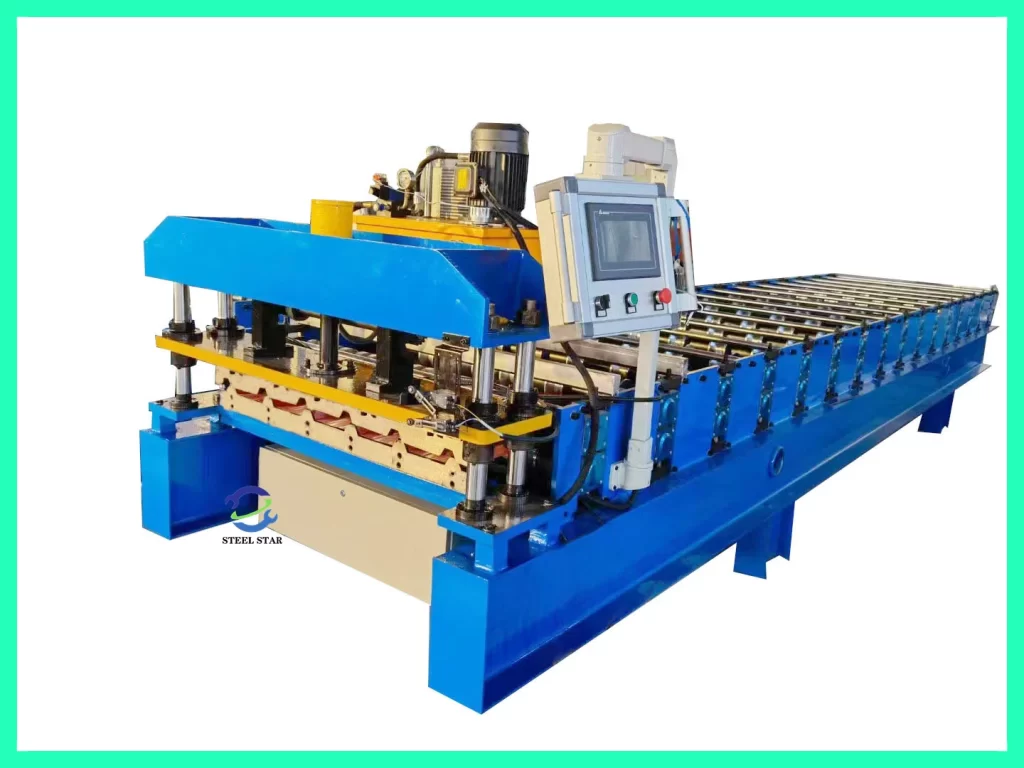
A steel roofing machine, also known as a metal roof roll forming machine, is a specialized piece of industrial equipment designed to convert flat coils of steel into finished roofing profiles . The process, known as roll forming, involves feeding a continuous strip of metal through a series of progressive roller stations. Each station makes an incremental bend in the metal until the desired profile—be it corrugated, trapezoidal, or standing seam—is achieved . These machines are the cornerstone of the metal roofing industry, empowering manufacturers and contractors to create panels on-demand, either in a factory setting or directly at the construction site .
Key Components and the Forming Process
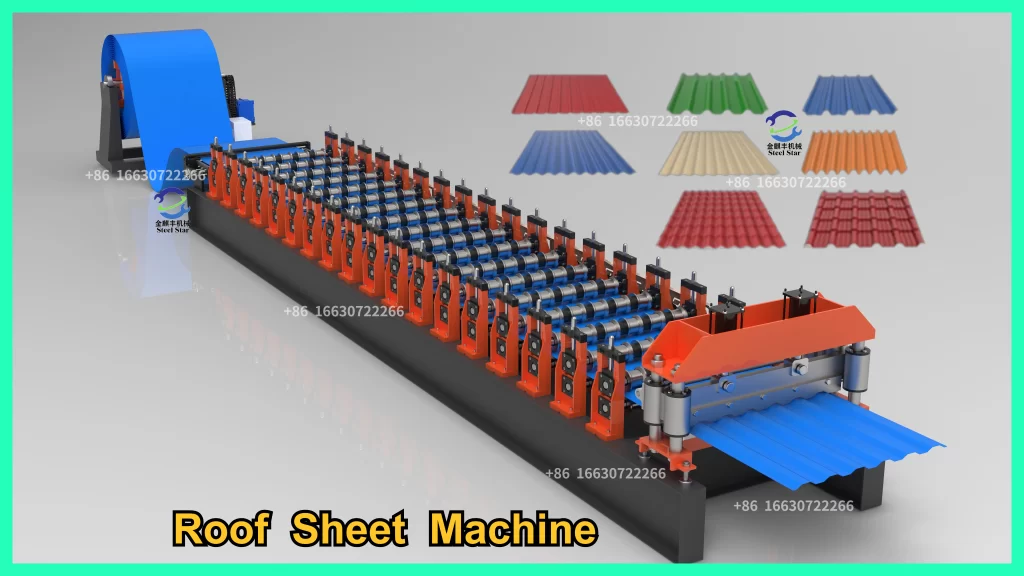
A typical steel roofing production line is an integrated system of several critical components working in seamless harmony :
- The Decoiler: The process begins with a decoiler, a robust stand that holds and slowly unwinds heavy coils of steel . This component ensures a controlled and steady feed of material into the forming line.
- Roll Forming Unit: This is the heart of the machine. It consists of a series of roll stands (typically between 12 and 24, depending on profile complexity) . Each stand contains hardened steel rollers that progressively shape the flat strip. For heavier gauge steel, more stands are required to prevent material stress and ensure a smooth, accurate bend .
- Cutting System: Once formed, the continuous panel must be cut to length. Modern machines use a flying shear or hydraulic cutting system that moves in sync with the panel, allowing for precise cuts without stopping production .
- Control Panel (PLC): The brain of the operation is the Programmable Logic Controller (PLC) . This computerized system allows operators to set panel lengths, production quantities, and speed, ensuring consistency and reducing material waste .
- Output Table: Finished panels are deposited onto an output table or conveyor, where they can be inspected and stacked for transport or installation .
Types of Steel Roofing Profiles
The versatility of the steel roofing machine is evident in the wide array of profiles it can produce, each suited for different applications :
- Corrugated Panels: Characterized by a classic wavy pattern, these panels are a staple for agricultural buildings, warehouses, and industrial sheds due to their high strength-to-weight ratio and excellent water runoff .
- Standing Seam Panels: Featuring vertical legs with concealed fasteners, these panels offer superior weather resistance and a sleek, modern aesthetic . They are the preferred choice for high-end residential homes, commercial buildings, and regions prone to extreme weather, as they allow for thermal expansion and provide high wind uplift resistance .
- Trapezoidal (R-Panels) Panels: With distinct angular ribs, these panels provide exceptional load-bearing capacity and are commonly used in both commercial roofing and siding applications .
- Tile Effect Profiles: These machines can also produce metal tiles that mimic the appearance of traditional clay or ceramic tiles, offering the classic look with the enhanced durability and longevity of steel .
Advantages of Investing in a Steel Roofing Machine
For contractors and manufacturers, owning a steel roofing machine offers a significant competitive edge :
- On-Demand Customization: One of the most significant benefits is the ability to produce panels in exact lengths required for a project . This eliminates the need for ordering pre-cut sections and drastically reduces on-site cutting and material waste. Some portable machines even allow for fabrication directly on the roof, enabling panels longer than standard transport limits .
- Enhanced Quality Control: By controlling the manufacturing process, operators can ensure consistent quality. Panels are fabricated without the dents, scratches, or damage that can occur during the transportation of pre-made sheets .
- Cost Efficiency and Profitability: Producing panels in-house eliminates the middleman, saving on manufacturer markups and delivery fees . While the initial investment can be significant, the reduction in labor, waste, and logistics often allows business owners to recoup their costs within a short period, sometimes on a single large job .
- Superior Product Performance: Steel roofing panels are renowned for their strength and longevity. Properly coated steel (such as galvanized or galvalume) can withstand wind speeds up to 140 mph, is fire-resistant, and can last for decades with minimal maintenance, often backed by 30- to 50-year warranties .
- Environmental Sustainability: Steel is 100% recyclable and often contains recycled material . Furthermore, portable machines reduce emissions from large delivery trucks, and the finished roofs can be coated with energy-efficient cool-roof pigments, lowering building energy consumption .
Stationary vs. Portable Machines
Steel roofing machines generally fall into two categories based on their mobility :
- Stationary Machines: These are large, industrial systems designed for high-volume production in a fixed workshop or factory setting. They offer the highest speeds (up to 30 meters per minute or more) and are ideal for manufacturing plants that supply roofing contractors .
- Portable Roofing Machines: These are compact, mobile units designed to be transported to job sites, often in a trailer or truck . They empower roofing contractors to fabricate panels on-demand, eliminating transportation delays and logistics. While typically slower than industrial counterparts, their versatility and on-site capabilities offer immense value .
The steel roofing machine is a testament to how industrial innovation drives the construction industry forward. By combining precision engineering with automated control, these machines produce roofing solutions that are stronger, more durable, and more sustainable than ever before. Whether it’s a massive industrial complex or a custom residential home, the steel roofing machine provides the tools to build a higher standard of shelter, one panel at a time .
Website:
www.greatforming.com (English)
www.arabicgreatforming.com (عربي)
www.russiangreatforming.com(Русский)
www.spanishgreatforming.com(Español)
www.frenchgreatforming.com(Français)
www.portuguesegreatforming.com(Portuguese)