

Guardians of the Highway: The Engineering Behind the Guardrail Forming Machine
Every day, millions of drivers traverse roads and highways, their safety silently ensured by miles of steel barriers standing between their vehicles and potential hazards. These unassuming guardians—guardrails, crash barriers, and highway safety systems—are the product of sophisticated engineering and precision manufacturing. At the heart of this production lies a remarkable piece of industrial equipment: the Guardrail Forming Machine. This specialized roll forming system transforms flat steel coils into the corrugated safety barriers that line our transportation infrastructure worldwide .
What is a Guardrail Forming Machine?
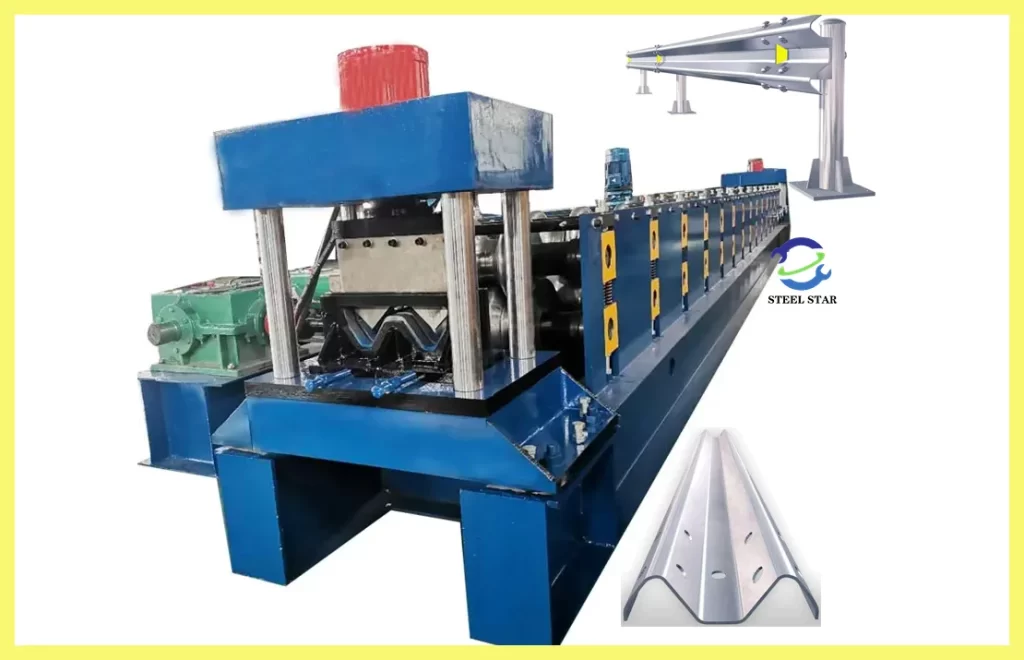
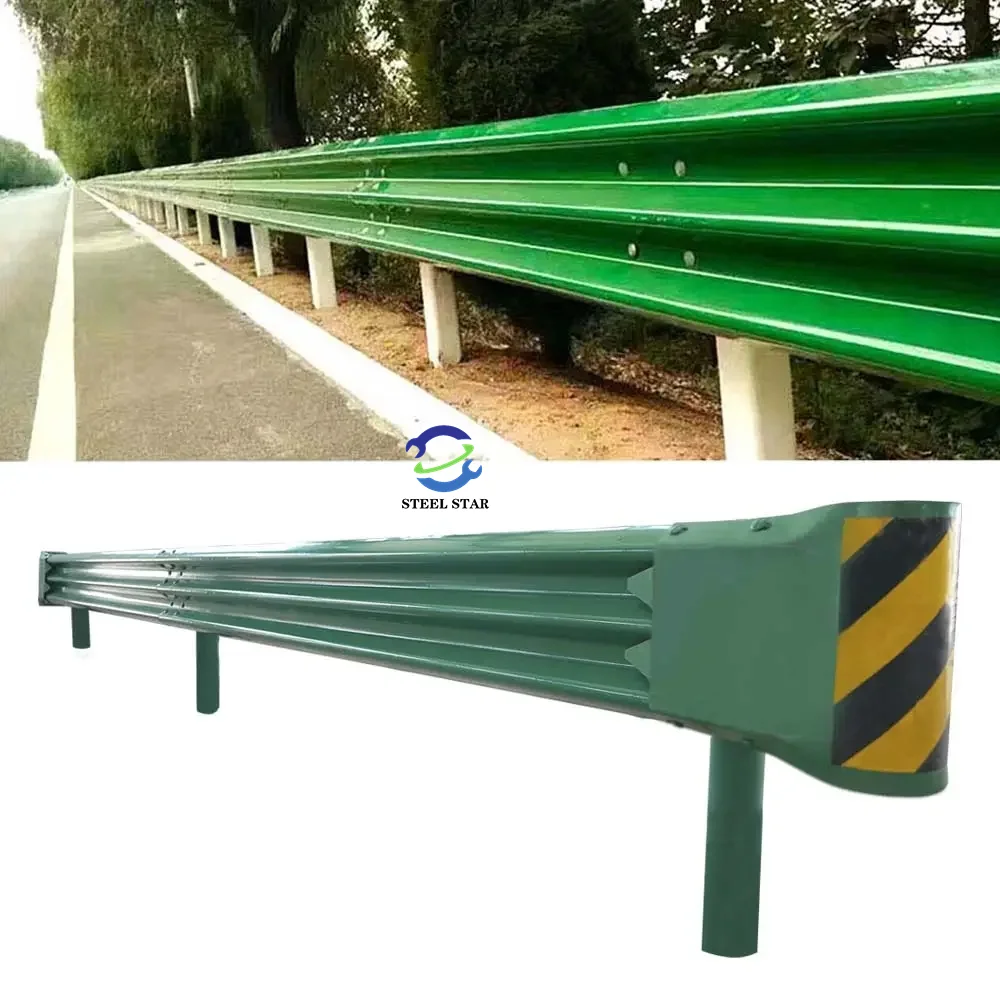
A guardrail roll forming machine is specialized industrial equipment designed to manufacture highway guardrails and crash barriers from coiled steel sheet metal . These machines produce the corrugated steel profiles—commonly known as W-beam (two-wave) and thrie-beam (three-wave) guardrails—that are installed along roads, highways, bridges, and other transportation routes to prevent vehicles from veering off the path and to mitigate the severity of accidents .
The machine employs cold roll forming technology, a continuous bending process that operates at room temperature, gradually shaping flat steel strips into the required safety profiles through a series of progressive roller stations . The result is a high-strength, precisely dimensioned safety barrier that meets strict regulatory standards .
Types of Guardrail Profiles
Guardrail forming machines typically produce two primary profile types, each designed for specific applications and safety requirements :
Two-Wave (W-Beam) Guardrails
The most common highway barrier profile, the two-wave guardrail features a distinctive W-shaped cross-section that provides excellent strength-to-weight ratio and energy absorption characteristics. These are widely used along standard highway sections, rural roads, and where moderate impact protection is required .
Three-Wave (Thrie-Beam) Guardrails
Featuring a more complex triple-corrugation profile, three-wave guardrails offer enhanced impact resistance and are typically employed in high-risk areas such as bridge approaches, median barriers, tight curves, and locations with higher traffic speeds or heavy vehicle exposure . Many modern machines offer interchangeable cassettes or adjustable roller stations that allow production of both profiles on a single production line .
Anatomy of the Machine: Key Components
A complete guardrail roll forming line is an integrated system of several sophisticated stations working in seamless coordination :
1. Decoiler (Uncoiler)
The production process begins with the decoiler, a heavy-duty stand that holds and unwinds steel coils weighing up to 10 tons or more . Modern systems feature automatic expansion systems with hydraulic or electric clamping to securely hold coil inner diameters typically ranging from 508mm to 600mm . Advanced lines may include pit-type coil cars or double uncoilers for continuous, uninterrupted production .
2. Feeding and Leveling System
Before forming, the steel strip must be flattened and properly aligned. The leveling machine typically employs a series of rollers—often a configuration of two pinch rollers and five to seven leveling rollers . These rollers, made from hardened 40Cr steel (HRC48°-52°), eliminate coil set and ensure the material is perfectly flat before entering the punching and forming stations . Servo-feeding systems provide precise control over material advancement .
3. Punching Station
Guardrails require specific hole patterns for mounting to posts and for section connections. This station, often a high-tonnage hydraulic press (ranging from 200 to 400 tons), precisely punches these holes before forming . The punching dies, typically constructed from wear-resistant Cr12MoV alloy steel, are designed according to national standards and customer specifications, accommodating patterns such as 9 or 10 holes per section . Some advanced lines position the punching station before the roll former to ensure clean, distortion-free holes .
4. Roll Forming Station
The heart of the machine, the roll forming station consists of multiple forming stands—typically 10 to 20 stations depending on profile complexity and material thickness . Each stand contains progressively shaped rollers that incrementally bend the steel strip.
Key engineering features include:
- Roller Material: High-grade steel such as GCr15 or equivalent, quenched to HRC58°-62° and chrome-plated for exceptional wear resistance and long service life .
- Shaft Diameter: Robust shafts, often 80mm to 100mm in diameter, made from hardened 40Cr steel .
- Drive Systems: Heavy-duty gearbox drives or chain transmission systems provide the substantial torque required for forming thick (2.5mm to 4.0mm) high-strength steel .
- Machine Frame: Constructed from high-intensity welded H-beam steel to withstand the tremendous forming forces without deflection .
5. Cutting System
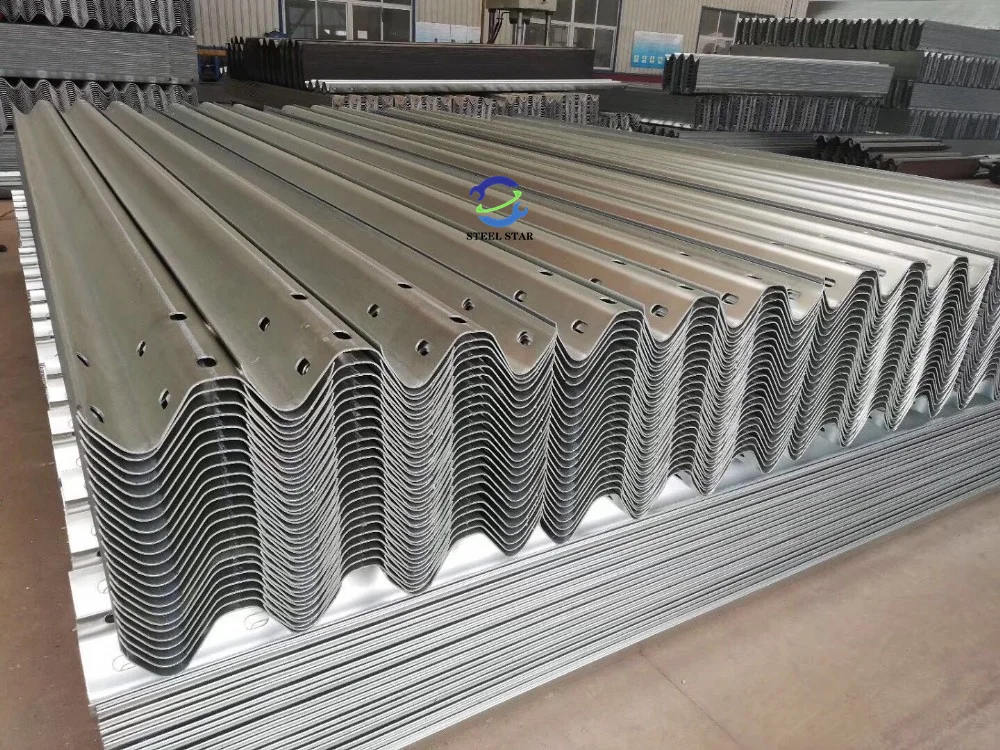
Once formed, the continuous profile must be cut to precise lengths—typically standard guardrail sections of 4320mm (approximately 14 feet) . Modern machines employ flying die cutting systems or hydraulic shears that move in sync with the moving profile, allowing for precise cuts without stopping production . Length accuracy of ±2.0mm to ±3.0mm is achievable through encoder feedback and PLC control .
6. Control System (PLC)
The brain of the operation is a Programmable Logic Controller (PLC) with a touch-screen human-machine interface . Leading manufacturers utilize components from Mitsubishi, Panasonic, Omron, Delta, and other reputable brands .
The control system allows operators to:
- Set production lengths and quantities (often storing up to 20 different batch programs)
- Control punching patterns and hole positions
- Monitor production speed and diagnose faults
- Automatically stop when target quantities are achieved
7. Output and Stacking Systems
Finished guardrails are conveyed to run-out tables and may be automatically counted, stacked, and bundled by automatic stackers for efficient handling and transport .
Technical Specifications and Capabilities
Guardrail forming machines are engineered for heavy-duty industrial production with impressive specifications :
| Parameter | Typical Range |
|---|---|
| Material Thickness | 2.0mm – 4.0mm (commonly 2.5mm – 3.0mm) |
| Material Grade | Q235, Q345, or equivalent structural steel |
| Coil Weight Capacity | 5 – 10 tons (up to 15 tons) |
| Forming Stations | 10 – 20 stations |
| Production Speed | 8 – 15 m/min (approximately 2-4 pieces per minute for 4320mm length) |
| Main Motor Power | 18.5kW – 45kW |
| Total Installed Power | 45kW – 100kW |
| Length Accuracy | ±2.0mm – ±3.0mm |
| Machine Dimensions | Approximately 30m x 2.5m x 1.5m (length x width x height) |
Key Advantages of Guardrail Forming Machines
High Production Efficiency
Automated roll forming lines can produce guardrails at speeds of 8 to 15 meters per minute, significantly increasing production rates compared to traditional manufacturing methods . A single line with one or two operators can produce hundreds of complete guardrail sections per shift .
Exceptional Precision and Consistency
Roll forming ensures consistent profiles across every production run, with tight tolerances that are crucial for proper field installation and the reliable safety performance of guardrails . The precision of modern CNC-controlled machines eliminates dimensional variations that could compromise barrier integrity.
Cost-Effective Manufacturing
Automated roll forming reduces labor costs and minimizes material waste through precise length control and near-net-shape forming . In-house production eliminates reliance on external suppliers and protects against supply chain disruptions.
Material Versatility
Modern machines can handle various steel grades, from standard structural steel (Q235) to high-strength low-alloy steels, with thicknesses ranging from 1.5mm to 5.0mm . Galvanized and pre-painted materials can also be processed for enhanced corrosion resistance .
Durability and Long Life
Quality machines feature hardened rollers (HRC58°-62°), robust gearbox drives, and heavy-duty frames designed for 10-15 years of reliable service with proper maintenance . Wear-resistant materials and precision engineering minimize downtime and maintenance costs .
Maintenance and Operation Considerations
Proper maintenance is essential for sustained performance and longevity :
- Regular Lubrication: Chains, bearings, speed reducers, and slide mechanisms require periodic lubrication, typically monthly .
- Roller Cleaning: Forming rollers must be kept clean to prevent surface defects on finished guardrails .
- Die Maintenance: Punching and cutting dies require periodic inspection and sharpening to maintain hole quality and cut accuracy.
- Safety Protocols: All adjustments should be performed with the machine stopped and locked out .
Modern machines are designed for user-friendly operation, typically requiring only 1-2 trained operators . PLC-based controls with intuitive touchscreens simplify setup and reduce training requirements.
Industry Applications and Global Impact
Guardrail forming machines serve critical infrastructure needs worldwide :
- Highway Construction: Producing mainline barriers, median dividers, and ramp protection
- Bridge Safety: Manufacturing bridge railings and transition sections
- Work Zone Protection: Creating temporary barriers and portable guardrails
- Parking Facilities: Producing perimeter protection and traffic separation barriers
- Industrial Sites: Manufacturing perimeter fencing and vehicle impact protection
The guardrail forming machine represents a triumph of industrial engineering—a sophisticated system that transforms raw steel into the silent sentinels protecting lives on our roadways. By combining precision roll forming technology with robust hydraulic systems and intelligent controls, these machines produce safety barriers with the strength, consistency, and reliability that modern infrastructure demands.
From the initial decoiling of heavy steel coils to the final stacking of finished guardrail sections, every component of these production lines is engineered for efficiency, durability, and precision. As global infrastructure development continues and road safety standards become increasingly stringent, the guardrail forming machine remains an indispensable tool in the mission to make our highways safer for all travelers .
Website:
www.greatforming.com (English)
www.arabicgreatforming.com (عربي)
www.russiangreatforming.com(Русский)
www.spanishgreatforming.com(Español)
www.frenchgreatforming.com(Français)
www.portuguesegreatforming.com(Portuguese)