

If you are interested in the product and want more information, please leave your information .

WeChat (China) : +86 15075780050
Email : sam@greatforming.com
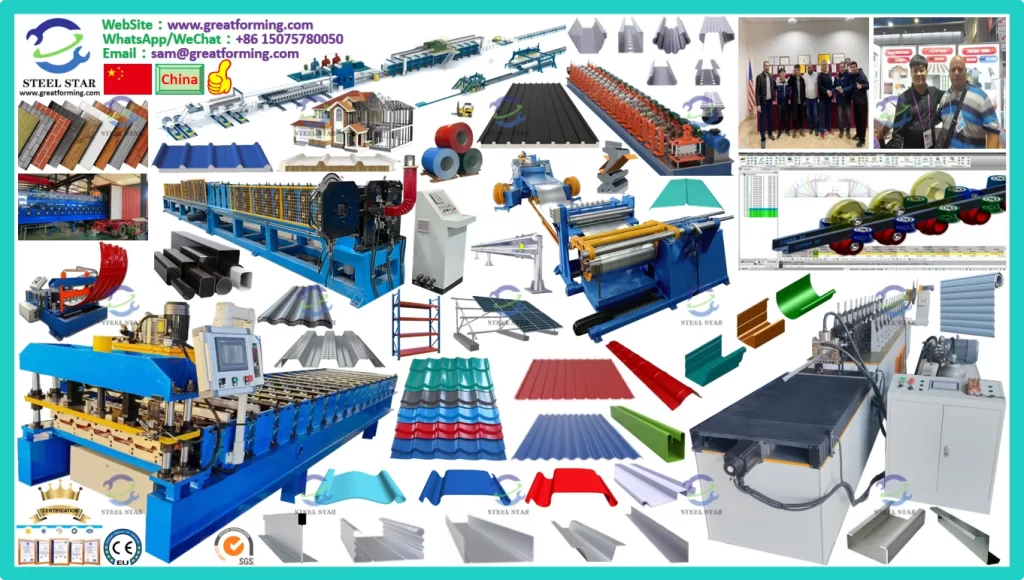
Below is a brochure of our factory products, which can be viewed and downloaded.
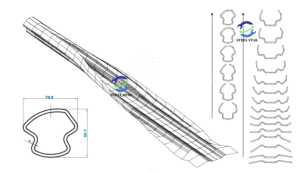
Roll forming is a type of rolling that involves continuously bending long strips of metal sheet (typically coiled steel) into the desired cross-section.
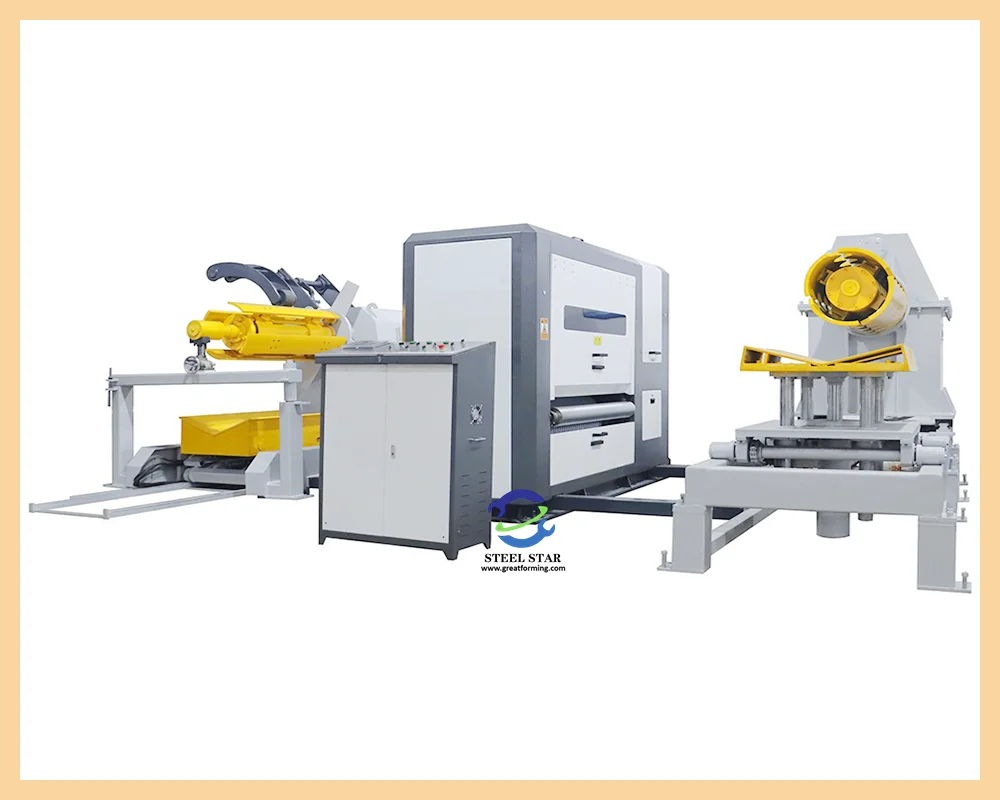
Design the mold shape and number of groups according to the required size. The shrinkage ratio of each group of cold bending is different. Through cold bending group by group, the final desired size can be achieved. Combined with electronic control system, hydraulic system, shearing system and counting encoder to realize automated operation.
Technical Parameters :
- Raw material width : 100mm — 1300mm (Can be customized according to your needs)
- Thickness of sheet : 0.15mm — 4mm (Can be customized according to your needs)
- speed : 10 m — 30 m/min (Can be customized according to your needs)
- Voltage : 380v 50hz 3phase / 220v 60hz 3phase (Can be customized according to your needs)
- Language : English / Spanish / Arabic / Russian / Portuguese / German / French (Can be customized according to your needs)
- Motor brand : Siemens / other (Can be customized according to your needs)
- Machine can be customized in length:0.1M — 1.5 M (Can be customized according to your needs)
Application Scenarios :
Related Product Information:
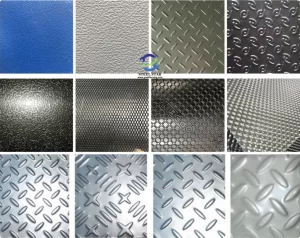
The Art and Precision of Metal Embossing: A Guide to Modern Metal Embossing Machines
Metal embossing is a timeless manufacturing process that transforms flat metal sheets into dimensional, textured, and visually striking surfaces. From the decorative patterns on elevator doors to the critical flow fields in hydrogen fuel cells, the technology behind creating these raised or recessed designs has evolved dramatically. At the heart of this evolution lies the **metal embossing machine**, a diverse category of equipment ranging from compact desktop identifiers to massive industrial roller systems. This article explores the workings, types, and applications of these machines, as well as the innovations shaping their future.
Understanding the Embossing Process
In manufacturing, embossing is a metalworking operation used to create raised or sunken designs (reliefs) in sheet metal. This is achieved by pressing the material between a matched pair of male and female dies, or by passing a strip of metal through patterned rollers . Unlike processes that cut or remove material, embossing is a forming process that displaces the metal to create a pattern. While it often changes the material’s thickness locally, the overall volume remains consistent .
Modern metal embossing machines are engineered to handle a wide variety of ductile metals, including aluminum, steel, stainless steel, and copper . They are valued for their ability to produce highly repeatable, intricate patterns in medium to high production runs with virtually no variation between parts .
Key Types of Metal Embossing Machines
The world of metal embossing machinery is broad, generally categorized by the type of embossing performed and the production environment.
1. Industrial Sheet and Strip Embossing Machines
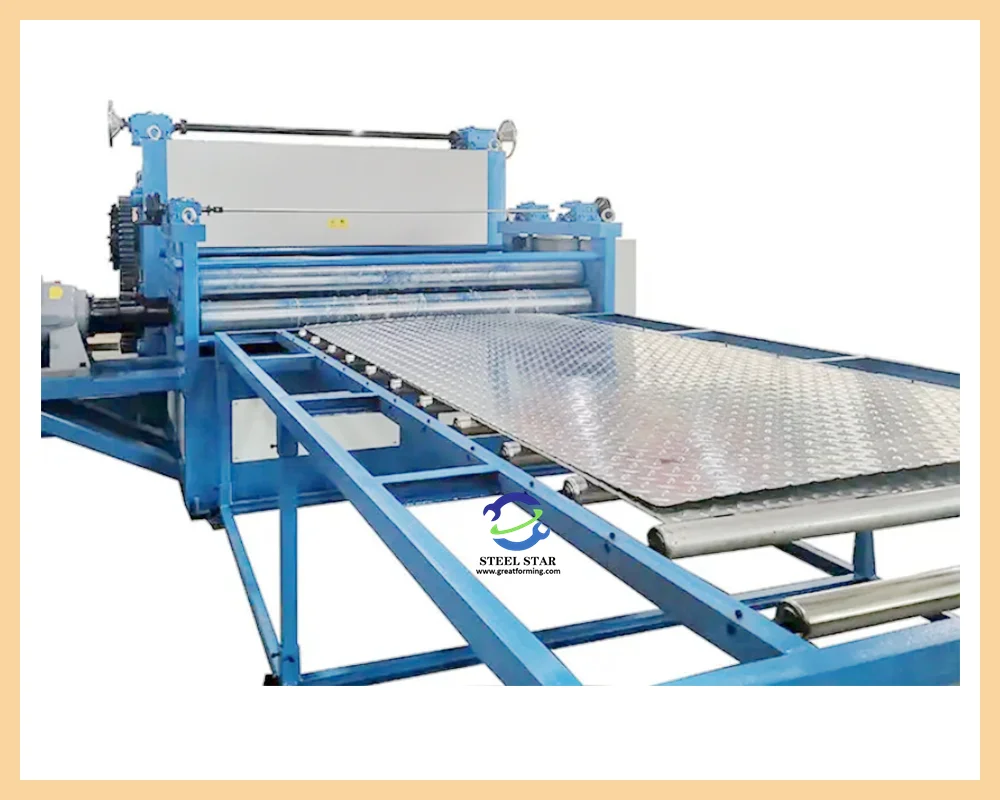
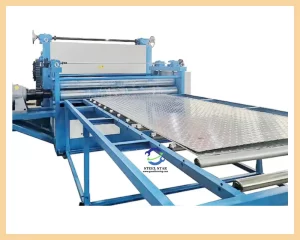
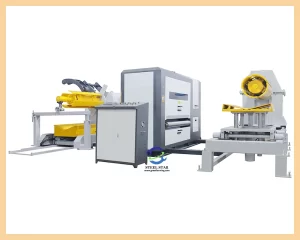
These heavy-duty machines are used for large-scale processing of metal coils and sheets. They typically function as a **roll forming line**, where the metal passes through a pair of counter-rotating rollers. One roller has the male pattern, and the other has the female pattern .
– **Applications:** Creating non-slip flooring, decorative panels for building materials, and textured surfaces for home appliances and automotive interiors .
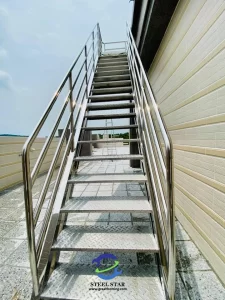
– **Example:** The **solid embossing rollers** system from manufacturers in Zhengzhou, China, can process materials up to 1000mm wide at speeds of 0-18 meters per minute, applying patterns to steel, aluminum, or copper for use in garage doors, elevators, and anti-skid stairs .
2. High-Precision Servo-Driven Embossing Units
For industries like automotive manufacturing, precision is paramount. These machines are often modular units integrated into robotic production lines.
Applications: Automated production of car parts. They perform “embossing punching” to create fixture points for headlights, bonnets, door hinges, and locks .
3. Automated Tag and Identification Embossers
For product identification, these machines emboss text, logos, and barcodes onto metal tags. They are essential for industries requiring durable labels that survive harsh conditions.
Applications: Marking equipment in chemical plants, steel mills, and outdoor facilities where painted or printed labels would fail.
4. Portable and Benchtop Embossing Machines
Designed for lower volume or decentralized marking needs, these compact units are fully functional standalone systems.
Applications: Creating identification plates for electrical cabinets, cable markers, and asset tags in industrial or even office environments .
Cutting-Edge Innovations in Metal Embossing
The field is not static; recent technological advancements are pushing the boundaries of what is possible with metal forming.One of the most significant recent developments is in hollow embossing, an efficient, resource-saving forming process for creating complex hollow structures. Unlike traditional stamping, which is a discontinuous process, hollow embossing uses a pair of rollers in a continuous process, dramatically increasing output and reducing costs .
Key Advantages:
Reduced Process Forces: The incremental nature of the process reduces forming forces by a factor of approximately 10 compared to conventional methods, leading to smaller, more energy-efficient machines .
Flexibility: The modular design allows for quick reconfiguration to produce different geometries on the same machine .
Digitalization and Cognitive Forming
The factory of the future is smart, and embossing is following suit. Researchers are working on evolving embossing into a “cognitive forming process” by integrating sensors and intelligent algorithms. This allows for real-time process monitoring and quality control, minimizing scrap during production . Furthermore, modern machines leverage computer-controlled technology to create intricate designs, with user-friendly interfaces for easy customization .
Applications Across Industries
The versatility of metal embossing machines makes them indispensable across a wide spectrum of industries.
Industry| Primary Applications|
Automotive| Fixture points for headlights, hinges, locks; structural and branding components |
Building & Construction| Decorative wall panels, elevator doors, anti-skid flooring, roofing, garage doors |
Energy| Flow fields for bipolar plates in fuel cells and electrolyzers for hydrogen production |
| Industrial Identification| Durable nameplates, asset tags, and data plates that resist heat, chemicals, and abrasion |
| Home Appliances| Textured surfaces and decorative trim on refrigerators, freezers, and ice houses |
Market Trends and Future Outlook
The global metal embossing machine market is on a steady upward trajectory. Valued at approximately $57.47 billion in 2025, it is projected to reach $72.46 billion by 2029, growing at a compound annual growth rate (CAGR) of 6.0% . This growth is fueled by several key factors:
1. Rise of Industrial Manufacturing: An increase in manufacturing activities, particularly in machinery and metal components, directly drives demand for embossing .
2. The Booming Automotive Industry: As vehicle production increases, so does the need for embossed parts for functionality, safety, and branding .
3. Customization and Aesthetics: There is a growing demand for personalized and aesthetically pleasing metal products in consumer goods and architecture .
However, the market is not without its challenges. Recent geopolitical tensions and shifts in trade policies, such as the sharp rise in U.S. tariffs in 2025, are creating disruptions in supply chains. These tariffs affect the import of high-precision embossing equipment from traditional manufacturing hubs like Italy and Switzerland, potentially slowing adoption in the automotive and architectural sectors .
The metal embossing machine is a testament to how a classic manufacturing process can be continuously reinvented to meet modern demands. From the mechanical precision of servo-driven automotive units to the groundbreaking efficiency of the flexROLLmax for the hydrogen economy, these machines are critical enablers of modern industry. As the market trends toward smart, flexible, and sustainable production, the humble embossing machine stands at the forefront, quietly shaping—quite literally—the metal world around us.
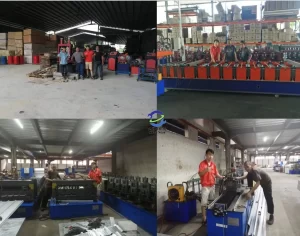
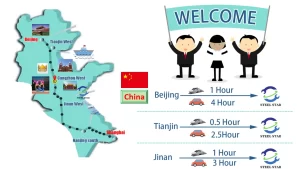
Factory Information:

Website:
www.greatforming.com (English)
www.arabicgreatforming.com (عربي)
www.russiangreatforming.com(Русский)
www.spanishgreatforming.com(Español)
www.frenchgreatforming.com(Français)
www.portuguesegreatforming.com(Portuguese)