

If you are interested in the product and want more information, please leave your information .

WeChat (China) : +86 15075780050
Email : sam@greatforming.com
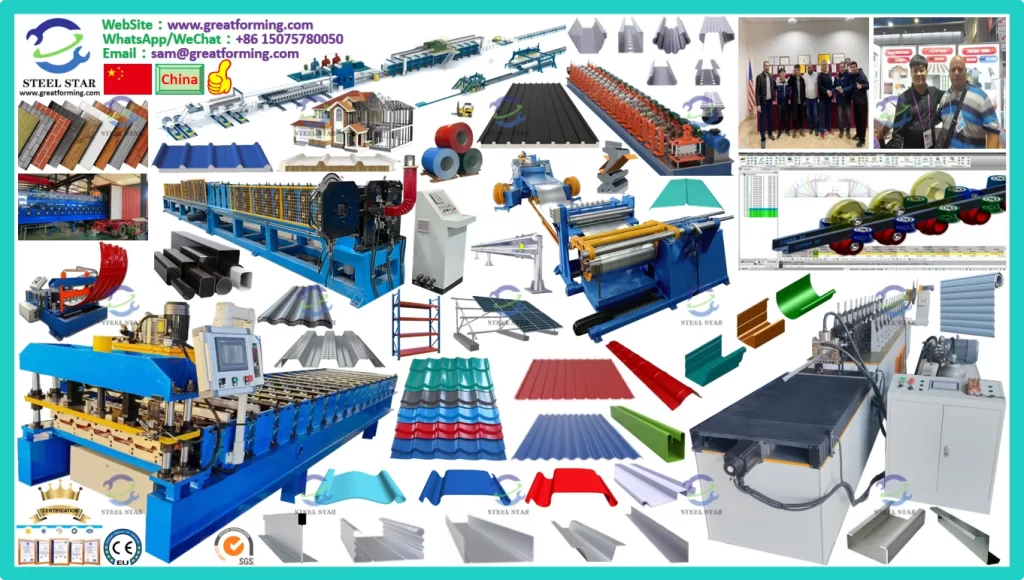
Below is a brochure of our factory products, which can be viewed and downloaded.
Roll forming is a type of rolling that involves continuously bending long strips of metal sheet (typically coiled steel) into the desired cross-section.
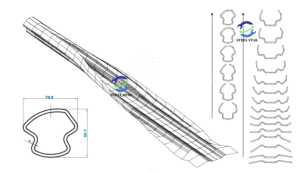
Design the mold shape and number of groups according to the required size. The shrinkage ratio of each group of cold bending is different. Through cold bending group by group, the final desired size can be achieved. Combined with electronic control system, hydraulic system, shearing system and counting encoder to realize automated operation.
Technical Parameters :
- Raw material width : 100mm — 500mm (Can be customized according to your needs)
- Thickness of sheet : 0.3mm — 1mm (Can be customized according to your needs)
- speed : 10 m — 30 m/min (Can be customized according to your needs)
- Voltage : 380v 50hz 3phase / 220v 60hz 3phase (Can be customized according to your needs)
- Language : English / Spanish / Arabic / Russian / Portuguese / German / French (Can be customized according to your needs)
- Material of rollers : Gcr15 / Cr12 / Cr12 Mov (Can be customized according to your needs)
- Motor brand : Siemens / other (Can be customized according to your needs)
- Electronic control PLC : Siemens / Delta / other (Can be customized according to your needs)
- Number of roller rows: According to product design
Application Scenarios :
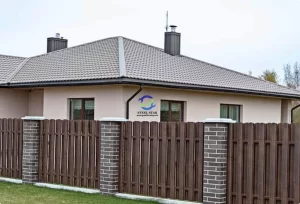
Equipment Production Line:
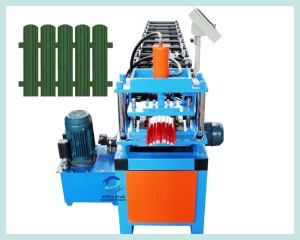
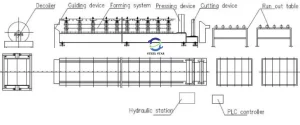
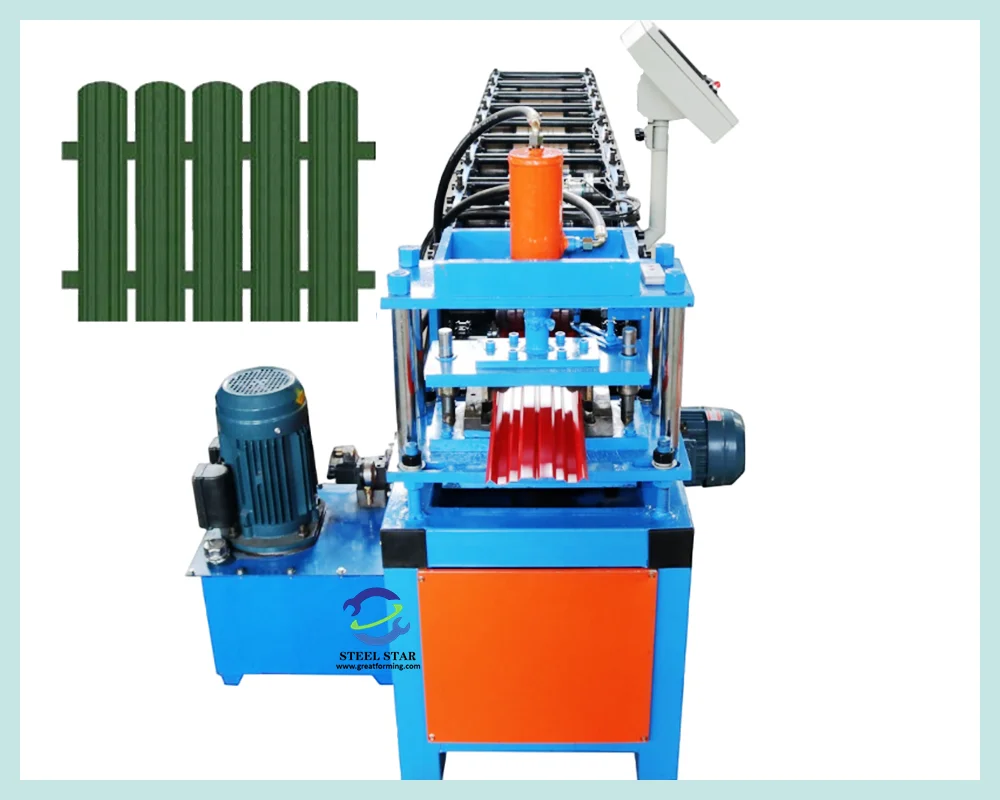
The Steel Picket Fence Machine: Modern Manufacturing for Classic Boundaries
The white picket fence has long been a symbol of home, stability, and suburban tranquility . In the modern era, the mass production of these classic boundaries, as well as their more robust industrial counterparts, is made possible by a sophisticated piece of engineering: the Steel Picket Fence Roll Forming Machine. This equipment transforms flat coils of metal into precise, durable, and uniform fence pickets with remarkable speed and efficiency.
What is a Steel Picket Fence Machine?
A steel picket fence machine is a specialized piece of industrial equipment designed for the high-volume production of metal profiles used in fencing . Utilizing a process known as roll forming, these machines take a continuous strip of metal—typically steel, galvanized steel, or colored steel—and pass it through a series of progressive roller stations . Each station incrementally bends and shapes the metal until the desired profile, such as a classic picket or a security-oriented palisade, is achieved . Modern machines are fully automated and controlled by a Programmable Logic Controller (PLC), ensuring consistent output and minimal manual intervention .
Core Components and the Production Process
The transformation from raw material to finished fence picket is a seamless, automated journey through several key stages .
1. Uncoiler (Material Feeding): The process begins with an uncoiler, which holds and feeds heavy coils of flat metal sheet into the production line. This component allows for continuous, uninterrupted operation . The raw material is typically fed automatically, with sensors regulating speed and tension .
2. Punching and Cutting System (Pre-Forming): Before the metal is fully shaped, many machines integrate a hydraulic punching system. This mechanism creates essential features such as holes for rails or screws, and can even produce decorative patterns or precise cuts for ornamental picket tops (like spear or round shapes) . A first cutting station might also be used to shape the upper portion of each picket .
3. Roll Forming Station (Shaping): This is the heart of the machine. The flat metal strip travels through a series of roller stations (or “stands”). With each pass, the rollers, made from hardened tool steel like Cr12, progressively fold the metal . For instance, a machine might first form the hems on the edges, then gradually create the profile’s height and any central ribs for reinforcement . The number of forming steps, often ranging from 12 to 20 or more, ensures a smooth and precise transition without stressing the material .
4. Cutting to Length: Once the profile is fully formed, an automatic flying or hydraulic shear cuts the continuous strip into individual pickets or panels of a pre-programmed length. This system ensures clean, burr-free cuts and precise, repeatable dimensions .
5. PLC Control System: The entire line is orchestrated by a PLC control unit with a user-friendly touch screen interface . Operators can set parameters such as panel length, production speed, punching patterns, and the quantity required. The system automatically manages the synchronization of all components, from the uncoiler to the final cutter, ensuring high accuracy and reducing material waste .
Types of Fences Produced
The versatility of the roll forming process allows manufacturers to produce a variety of fence styles to suit different needs :
Picket Fences: The classic residential style, characterized by evenly spaced vertical boards. The machine can produce pickets with flat, rounded, or pointed tops for decorative appeal .
Palisade Fences: A popular choice for high-security applications in industrial and commercial settings. These fences feature vertical steel pales with pointed or spear-shaped tops, creating a formidable barrier .
Dura Fence Panels: A robust option often used for temporary security or permanent perimeters, known for its strength and durability .
Advantages of Automated Roll Forming
The shift to automated roll forming machines offers significant benefits over manual fabrication methods like welding .
1. High Production Speed and Efficiency: These machines are designed for high-speed operation, with production capacities often reaching 20-30 meters per minute. This allows manufacturers to fulfill large orders quickly .
2. Cost-Effectiveness: Automation drastically reduces labor costs. The continuous process also minimizes material waste compared to methods that handle individual pieces, leading to significant long-term savings .
3. Consistency and Precision: PLC control ensures that every picket produced is identical to the last, meeting strict quality standards. This precision is vital for creating uniform fence panels that are easy to assemble and install .
4. Customization and Versatility: With adjustable roller dies and programmable controls, a single machine can produce a wide range of profiles and sizes. Manufacturers can easily switch between different designs to meet specific project requirements .
5. Durability of Product: The cold-roll forming process strengthens the metal, creating a final product that is robust, corrosion-resistant (especially when using galvanized or coated steels), and requires minimal maintenance .
Applications Across Industries
The products of these machines are ubiquitous, finding applications in a wide array of settings :
Residential: For property boundaries, gardens, and decorative perimeters.
Commercial and Industrial: Securing warehouses, factories, schools, and government buildings. Palisade fencing is particularly favored for its deterrent qualities .
Agricultural: Containing livestock and marking field boundaries with strong, reliable fencing.
Public Spaces: Enclosing parks, sports facilities, and infrastructure sites to ensure public safety.
The steel picket fence roll forming machine represents a perfect synergy of traditional design and modern technology. By automating a complex manufacturing process, it enables the efficient, cost-effective, and customizable production of high-quality metal fencing. Whether creating the idyllic white picket fence for a new home or a high-security palisade for an industrial complex, this machinery stands as an indispensable asset in the world of modern construction and manufacturing .
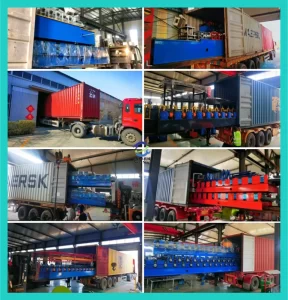
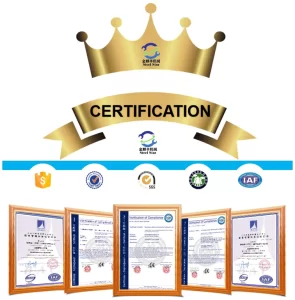
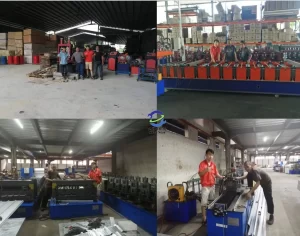
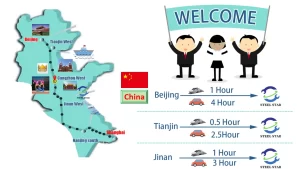
Factory Information:

Website:
www.greatforming.com (English)
www.arabicgreatforming.com (عربي)
www.russiangreatforming.com(Русский)
www.spanishgreatforming.com(Español)
www.frenchgreatforming.com(Français)
www.portuguesegreatforming.com(Portuguese)