

In the world of structural concrete and steel framing, efficiency and precision are paramount. The floor deck forming machine, a specialized piece of roll-forming equipment, stands as a critical innovation, transforming raw steel coil into the profiled sheets that form the skeletal framework of countless buildings. This article explores the function, types, benefits, and applications of these indispensable machines.
What is a Floor Deck Forming Machine?
A floor deck forming machine is a heavy-duty, automated production line that fabricates metal floor decking (also called composite deck or corrugated deck). It operates through a process known as cold roll-forming. A continuous coil of sheet steel, typically galvanized, is fed into the machine. It then passes through a series of precisely engineered roller dies, each station incrementally bending the steel until it emerges as a finished deck profile with specific ribs, embossments, and edge details. These profiles are then cut to length automatically.
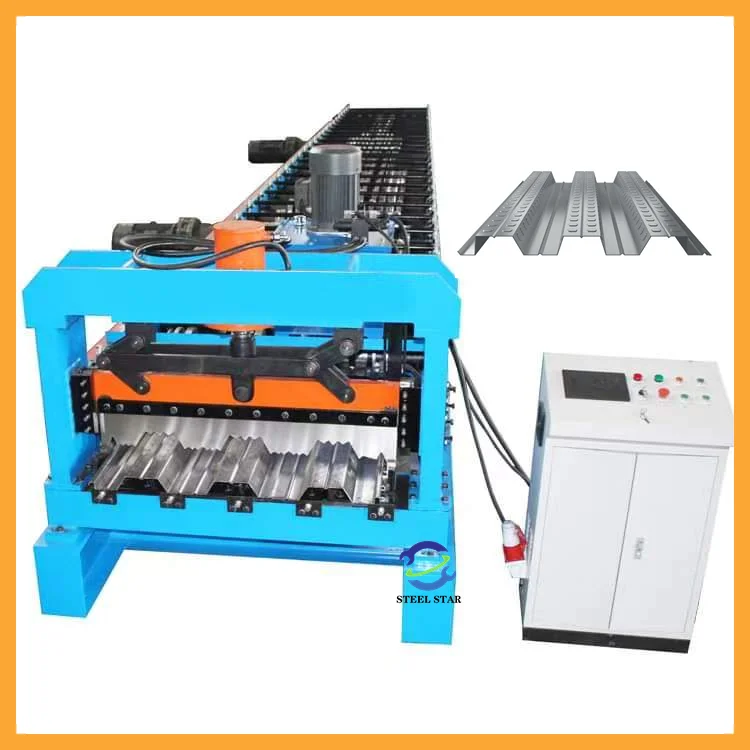
Primary Functions and Output
The machine’s core function is to create a permanent structural formwork. The resulting decking serves three key purposes:
- Formwork: It acts as a permanent mold to support wet concrete during pouring and curing.
- Reinforcement: The profiled steel, often combined with welded shear studs, bonds with the hardened concrete to create a composite floor system, providing exceptional tensile strength.
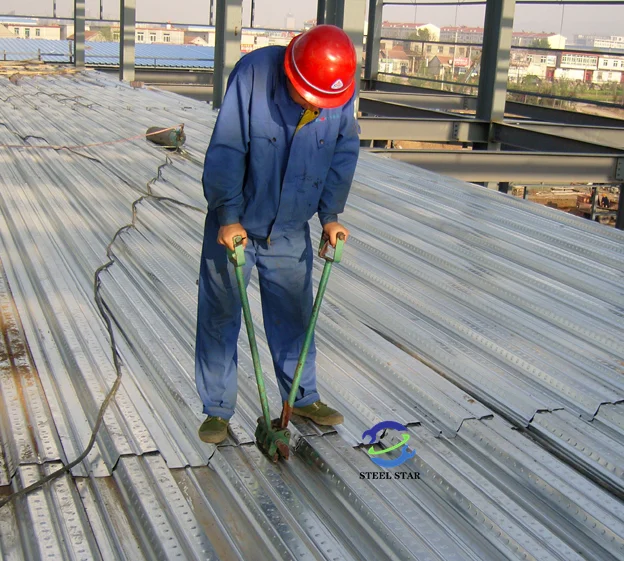
- Platform: It provides a safe working surface for construction crews immediately upon installation.
Types and Configurations
Machines are categorized by the deck profile they produce, which dictates the floor system’s load-bearing capacity and span capabilities:
- Composite Deck Machines: Produce profiles with deformations (embossments) on the ribs to ensure a mechanical bond with the concrete. This is the most common type for building construction.
- Form Deck Machines: Create simpler, non-composite profiles used primarily as formwork for concrete slabs where the steel does not act compositely.
- Cellular Deck Machines: Manufacture sophisticated decks with enclosed channels within the ribs to house electrical, data, and HVAC services—an integral part of smart building design.
- Standing Seam Deck Machines: Used for roof decking, producing long, uninterrupted panels with raised seams for waterproof connections.
Machines can be single-line (producing one panel width) or more advanced duplex lines that can slit the coil and form two narrower panels simultaneously, boosting output.
Key Advantages
The use of dedicated forming machines offers transformative benefits:
- High-Speed, On-Demand Production: Enables just-in-time manufacturing at the project site or factory, reducing storage needs, handling damage, and logistics costs.
- Unwavering Consistency and Quality: Every meter of deck produced has identical geometrical and mechanical properties, ensuring predictable structural performance and easy installation.
- Design Flexibility: Modern CNC-controlled machines can be tooled for custom profiles, depths, and widths to meet specific engineering requirements, allowing optimization of material use.
- Material Efficiency: Precision forming minimizes steel waste. The ability to use high-strength steels allows for lighter, stronger decks.
- Economic Construction: By integrating formwork, reinforcement, and platform into one quickly installed element, projects see significant savings in labor, time, and overall framing costs.
Applications and Impact
Floor deck is ubiquitous in:
- High-rise commercial offices and residential towers.
- Hospitals, universities, and institutional buildings.
- Industrial facilities and warehouses.
- Multi-level parking structures.
The machine that produces it is therefore a foundational technology in modern construction. It directly enables the fast-paced “top-down” construction methods seen in urban centers, where a new floor cycle can be completed every few days. The strength and span capabilities of machine-formed deck allow for column-free interior spaces, offering architects and developers greater design freedom.
Considerations and Future Trends
Operating these machines requires skilled technicians for setup, tooling changes, and maintenance. The initial capital investment is significant, making them the domain of specialized manufacturers and large contractors. The future points toward increased automation and digitization. Integration with Building Information Modeling (BIM) systems will allow for direct machine programming from 3D models, further reducing errors. Developments in higher-strength steels and more efficient profile designs will continue to push the boundaries of span and load capacity.
The floor deck forming machine is a quintessential example of industrial engineering serving the built environment. It is more than just a fabricator; it is an enabler of modern architecture’s scale, speed, and ambition. By turning a simple coil of steel into a smart, structural component, these machines don’t just shape metal—they help shape the very skyline of our cities, forming the robust floors upon which modern life is built.
Website:
www.greatforming.com (English)
www.arabicgreatforming.com (عربي)
www.russiangreatforming.com(Русский)
www.spanishgreatforming.com(Español)
www.frenchgreatforming.com(Français)
www.portuguesegreatforming.com(Portuguese)