

Pipe Forming Machine: The Engine of Tubular Product Manufacturing
The pipe forming machine is a cornerstone of modern industrial manufacturing, responsible for producing the vast array of tubular products essential to infrastructure, construction, automotive, and countless other sectors. This sophisticated equipment transforms flat strip material—typically steel, aluminum, or other metals—into precise, strong, and consistent pipes and tubes through a highly engineered, continuous forming process.
Fundamental Principles and Types
At its core, a pipe forming machine utilizes roll forming technology to progressively shape metal. The two primary methods dominate the industry:
- Longitudinal Seam Welding : This is the most common method for structural and mechanical tubing. The machine forms the strip into a circular cross-section and then welds the longitudinal seam using Electric Resistance Welding or High-Frequency Induction welding. This creates a strong, continuous bond.
- Spiral Pipe Forming: Used for large-diameter pipes (e.g., for pilings or conduits), this method helically winds and welds a continuous strip to create pipes with diameters far exceeding the width of the original coil.
Key Components of a Longitudinal Pipe Mill
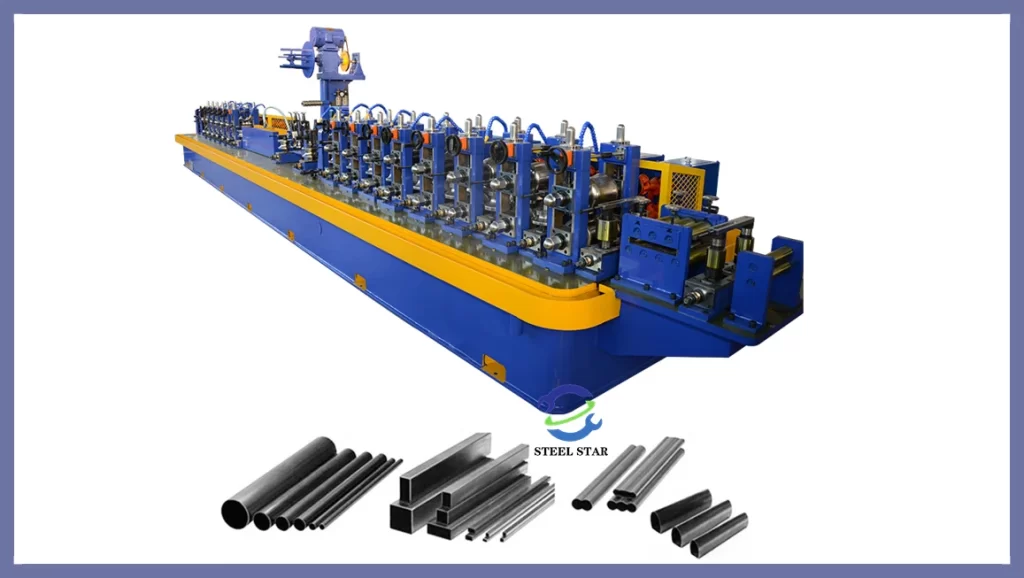
A standard pipe forming and welding line is an integrated system consisting of:
- Uncoiler & Entry End: Feeds the metal coil into the line, often with a flattening or leveling stage.
- Forming Section: A critical series of contoured rolls that gradually bend the flat strip into an open “C” shape and finally into a closed circular “O” shape. Precision here ensures a uniform seam gap.
- Welding Unit: The heart of the machine. For pipes, high-frequency current is applied to the open seam edges, heating them to a forging temperature. A set of squeeze rolls then fuses the edges together without filler metal, creating a clean, strong weld.
- Sizing Section: A set of calibrated rolls that cold-work the welded pipe to its final, precise outside diameter and roundness, also improving weld integrity.
- Cut-Off: A traveling saw or cutting torch shears the continuous pipe into predetermined lengths.
- Run-Out Table & Stacking: Conveys and collects the finished pipes.
Advantages and Capabilities
- High Production Speed: Modern lines operate continuously at high speeds, producing dozens of meters of pipe per minute.
- Material and Cost Efficiency: Utilizes coil stock with minimal waste and reduces labor costs through automation.
- Superior Consistency: Delivers pipes with exceptional dimensional accuracy (diameter, wall thickness, straightness) and uniform mechanical properties.
- Versatility in Output: By changing the forming rolls and tooling, a single mill can produce a wide range of diameters, wall thicknesses, and even square or rectangular hollow sections (from a round pre-form).
- Strength: The cold-forming and welding process can enhance the strength of the final product.
Technological Advancements
Contemporary pipe mills leverage advanced technology for improved quality and control:
- Digital Control Systems: PLCs and HMIs manage the entire process, allowing for precise parameter setting, recipe storage, and real-time monitoring.
- Automated Welding Control: Systems dynamically adjust welding power and speed based on seam tracking and temperature feedback to ensure perfect weld integrity.
- Non-Destructive Testing : In-line ultrasonic or eddy-current testing immediately inspects the weld seam for defects.
- Servo-Driven Systems: Provide ultra-precise control for cutting and handling.
Applications and Impact
The pipes produced are ubiquitous:
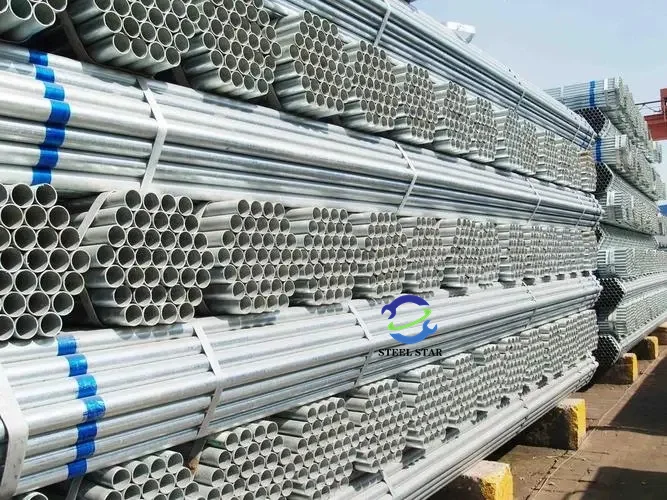
- Construction: Structural columns, scaffolding, fencing.
- Infrastructure: Water and gas distribution, electrical conduits, pilings.
- Automotive: Exhaust systems, chassis components, hydraulic lines.
- Furniture & Appliances: Framework and aesthetic components.
The pipe forming machine is a paradigm of efficient, large-scale manufacturing. It seamlessly integrates metallurgy, mechanical engineering, and control systems to convert basic raw materials into a fundamental industrial product. Its evolution—driven by demands for higher quality, greater efficiency, and more sustainable production—continues to underpin the development of global infrastructure and manufacturing, proving that the most vital components are often those that operate behind the scenes.
Website:
www.greatforming.com (English)
www.arabicgreatforming.com (عربي)
www.russiangreatforming.com(Русский)
www.spanishgreatforming.com(Español)
www.frenchgreatforming.com(Français)
www.portuguesegreatforming.com(Portuguese)