

Steel Pipe Forming Machines: The Backbone of Modern Infrastructure
From oil and gas pipelines to structural columns and handrails, steel pipes are fundamental to modern construction and industry. At the heart of their mass production is the Steel Pipe Forming Machine, a sophisticated piece of industrial equipment that transforms flat steel strip (skelp) into a continuous, strong, and precise tubular product. This article explores the technology, processes, and significance of these essential machines.
Core Principle: From Strip to Tube
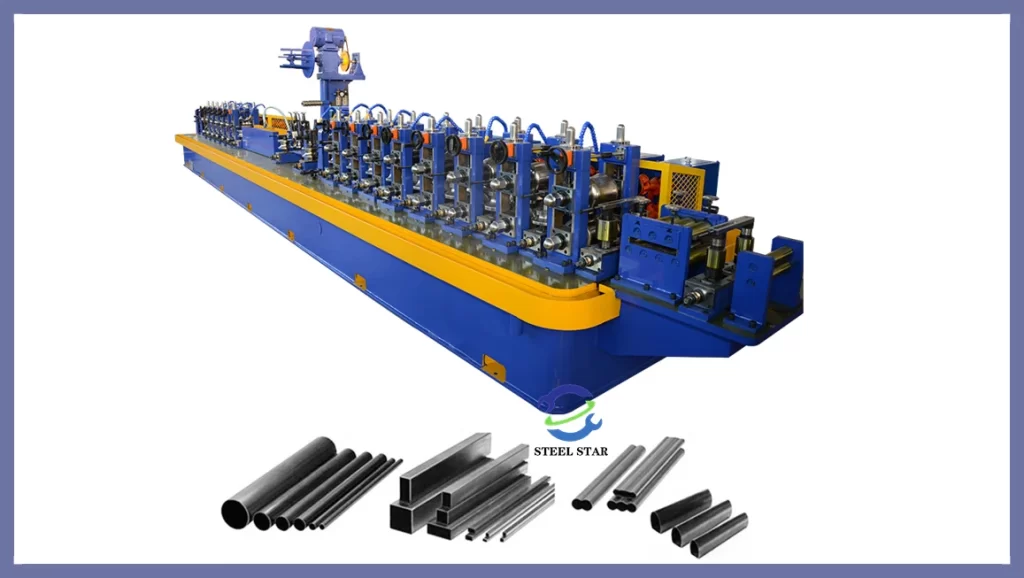
The fundamental operation of most pipe forming machines is continuous roll forming, followed by welding. The process can be summarized in four key stages:
- Uncoiling & Leveling: A heavy coil of steel strip is loaded and fed into the machine. An initial leveling unit removes any coil curvature or stresses to ensure a perfectly flat starting material.
- Forming: This is the heart of the process. The flat strip passes through a progressive series of contour roller dies (forming stands). Each set of rolls gradually bends the edges of the strip upward, transforming its cross-section from flat to a rounded shape. Common forming methods include:
- Cage Forming: Uses multiple stands of rollers arranged in a “cage” for gentle, uniform forming, ideal for thicker walls and high-quality pipe.
- Edge Forming: Focuses initial bending precisely on the strip’s edges to prepare them for a clean weld.
- Welding: Once the strip is shaped into an open-seam tube, the two edges are brought together under pressure. The continuous seam is then welded. The dominant technology is High-Frequency Induction (HFI) Welding, where an electrical current heats the edges to forging temperature before they are fused together without filler metal. This creates a strong, clean weld at high speeds.
- Sizing & Cutting: The welded pipe, still hot and malleable, passes through a series of sizing stands. These precision rollers calibrate the final outer diameter and perfect the circularity. Finally, a traveling cut-off saw (flying saw) cuts the continuous pipe to specified lengths without halting production.
Types of Pipe Forming Machines
Machines are categorized by the welding process and the diameter range they produce:
- Longitudinal Seam (ERW/HFI) Mills: The most common type for pipes from 1/2″ to 24″ (approx. 20mm to 600mm) in diameter. They produce a single, straight seam along the pipe’s length using Electric Resistance Welding (ERW) or HFI technology.
- Spiral Pipe Mills: These machines form pipe by helically winding and welding a steel strip at a controlled angle. This allows for the production of very large diameters (up to several meters) from a relatively narrow coil. Ideal for water transmission and piling.
Key Technological Features
- PLC & CNC Control: Modern mills are governed by programmable logic controllers (PLCs) and computer numerical control (CNC), ensuring precise control over forming pressure, welding parameters, and cutting length for consistent quality.
- Non-Destructive Testing (NDT): In-line inspection systems, such as ultrasonic or eddy current testing, continuously scan the weld seam for defects, ensuring integrity.
- High Speed & Efficiency: Advanced lines can operate at speeds exceeding 40 meters per minute, producing thousands of tons of pipe per month.
- Material Flexibility: They can process a range of steel grades, including mild steel, carbon steel, and some low-alloy steels, with varying strengths and corrosion resistances.
Importance and Applications
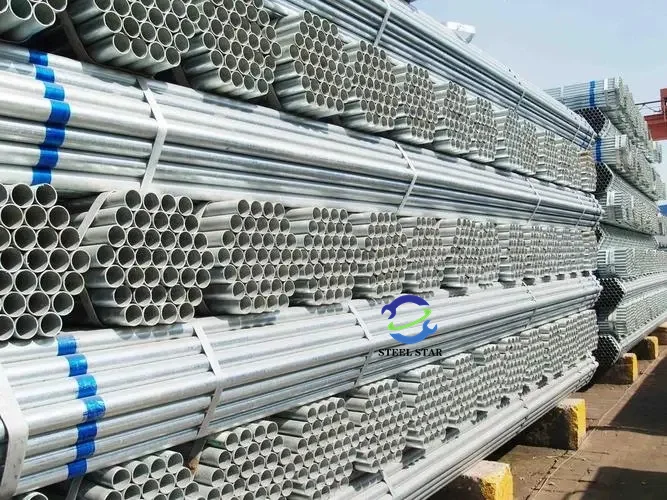
The output of these machines is critical to numerous sectors:
- Energy: Oil and gas transmission pipelines, drill pipes.
- Construction: Structural scaffolding, piling, columns, and conduit for electrical wiring.
- Utilities: Water and sewage mains, heating and cooling systems.
- Manufacturing: Mechanical components, rollers, and machinery frames.
The Steel Pipe Forming Machine is a paradigm of efficient, continuous industrial manufacturing. By seamlessly integrating mechanical forming, advanced metallurgical welding, and digital precision, it delivers the strong, reliable, and standardized tubular products that form the literal pipelines of the global economy. Its evolution—toward greater automation, higher material yields, and smarter quality control—continues to support the development of infrastructure and industry worldwide.
Website:
www.greatforming.com (English)
www.arabicgreatforming.com (عربي)
www.russiangreatforming.com(Русский)
www.spanishgreatforming.com(Español)
www.frenchgreatforming.com(Français)
www.portuguesegreatforming.com(Portuguese)