

Decoiler Machine for Sale: Your Gateway to Efficient Coil Processing
In the world of metal fabrication, coil processing is the starting point for countless manufacturing lines, from roll forming and slitting to stamping and blanking. At the heart of this initial, critical stage is the decoiler machine—a piece of equipment that may seem simple but is fundamental to productivity, material handling, and overall line integrity. Whether you’re setting up a new line, upgrading existing equipment, or adding capacity, choosing the right decoiler for sale is a pivotal decision.
What is a Decoiler Machine?
A decoiler (also known as an uncoiler or un-reeler) is a machine designed to hold, feed, and dispense coiled material—such as steel, aluminum, copper, or even certain plastics—into a processing line in a controlled and consistent manner. Its primary function is to replace manual, dangerous, and inefficient handling of heavy coils, ensuring smooth, tension-controlled pay-off that protects material quality and enables automated, high-speed production.
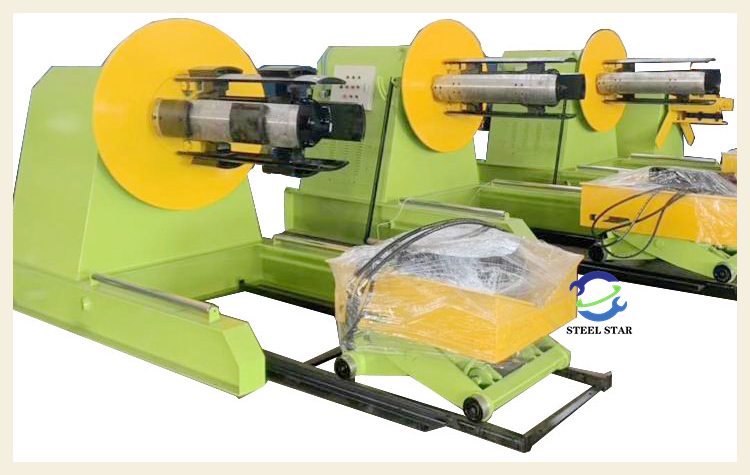
Key Types of Decoilers for Sale
The right decoiler depends on your material specifications and production needs. Common types available on the market include:
- Mandrel Decoilers (Shaft-Type): The most common type. A motorized or manually expanded mandrel is inserted into the coil’s inner diameter (I.D.) to support and unwind it. Ideal for medium to heavy coils.
- Single-Shaft: Cost-effective for standard applications.
- Double-Shaft: Allows for continuous operation; one coil is processed while the next is loaded onto the second shaft, minimizing downtime.
- Cantilever Decoilers: The mandrel is supported only on one side, allowing for easy side-loading of coils with a crane or forklift. Perfect for wider or heavier coils where overhead space is limited.
- Cradle Decoilers (or Cone-Type): The coil rests on adjustable, rotating cones or rollers rather than a central shaft. Excellent for delicate or pre-painted materials as they minimize inner diameter (I.D.) scratching. Often used for thinner gauge materials and smaller coils.
- Vertical Decoilers: The coil is loaded vertically, saving significant floor space. Best suited for lighter gauge materials and narrower widths, such as in wire processing or narrow strip lines.
Critical Specifications to Consider When Buying
When evaluating a decoiler for sale, assess these key parameters against your production requirements:
- Coil Capacity: Maximum and minimum Weight (e.g., 10 Ton), Inner Diameter (I.D.) (e.g., 508mm or 20″), Outer Diameter (O.D.) (e.g., 1500mm), and Material Width.
- Mandrel Type: Expanding Mandrel (mechanically or pneumatically expands to grip the I.D.) vs. Solid Shaft (requires a separate sleeve adapter).
- Drive and Tension System: Motorized decoilers provide active back-tension for critical processes like precision slitting. Brake-Controlled (passive) decoilers are simpler and cost-effective for less demanding applications.
- Supporting Equipment: Consider the need for an integrated Coil Car for automated loading, a Peel-Off Arm to thread the leading edge, and Edge Guidance systems (CPC) to ensure straight entry into the line.
- Construction & Controls: Look for robust welded steel frames, reliable bearings, and compatibility with your main line’s Programmable Logic Controller (PLC) for synchronized operation.

Top Benefits of Investing in a Quality Decoiler
- Enhanced Productivity: Enables continuous, high-speed feeding, drastically reducing manual handling time and labor costs.
- Improved Material Quality & Safety: Prevents coil damage (like scratches or deformation), ensures consistent feed tension, and eliminates the safety hazards of manual coil handling.
- Process Stability: Provides a stable, reliable start to your processing line, which is essential for maintaining product consistency in roll forming, stamping, or coating.
- Reduced Waste: Precise control minimizes threading errors, misfeeds, and material jams that lead to scrap.
- Operational Flexibility: The right decoiler allows for quick coil changes and handling of various coil sizes, supporting a diverse production schedule.
Finding the Right Decoiler for Sale: A Buyer’s Guide
- Audit Your Needs: Clearly define your material types, dimensions (thickness, width, coil weight), and required line speed.
- New vs. Used: New machines offer the latest technology, full warranties, and custom specifications. Quality used decoilers can provide excellent value but require thorough inspection of wear parts (mandrel, bearings, brakes) and maintenance history.
- Supplier Reputation: Purchase from reputable manufacturers or distributors known for robust engineering, reliable after-sales service, and readily available spare parts.
- Total Cost of Ownership: Look beyond the purchase price. Factor in installation, potential foundation work, training, energy consumption, and long-term maintenance support.
A decoiler machine is far more than just a holder for coil stock; it is the foundation of an efficient, automated, and safe material processing line. Investing in the right decoiler for sale—one that matches your specific capacity, control, and integration needs—pays immediate dividends in smoother operation, higher output, and superior product quality.
Ready to unlock the full potential of your coil processing line? Explore our extensive inventory of new and high-quality used decoiler machines for sale. Our experts are here to help you select the perfect model to drive your productivity forward. Contact us today for a detailed quote and technical consultation.
Website:
www.greatforming.com (English)
www.arabicgreatforming.com (عربي)
www.russiangreatforming.com(Русский)
www.spanishgreatforming.com(Español)
www.frenchgreatforming.com(Français)
www.portuguesegreatforming.com(Portuguese)