

CZ Purlin Roll Forming Machine: Engineering Excellence in Structural Manufacturing
The CZ purlin roll forming machine represents a specialized category of cold roll forming equipment designed specifically for producing C and Z-shaped structural purlins – the essential skeletal framework of modern industrial and commercial buildings. These machines transform flat steel coils into precisely formed, high-strength structural components that form the backbone of pre-engineered metal buildings worldwide.
Understanding CZ Purlins
C-Purlins:
- Vertical web with horizontal flanges at both ends
- Typically used as secondary structural elements
- Common applications: wall girts, roof purlins, and framing members
Z-Purlins:
- Angled web with flanges pointing in opposite directions
- Designed for overlapping at supports
- Superior load distribution in roofing applications
- Ideal for large-span structures
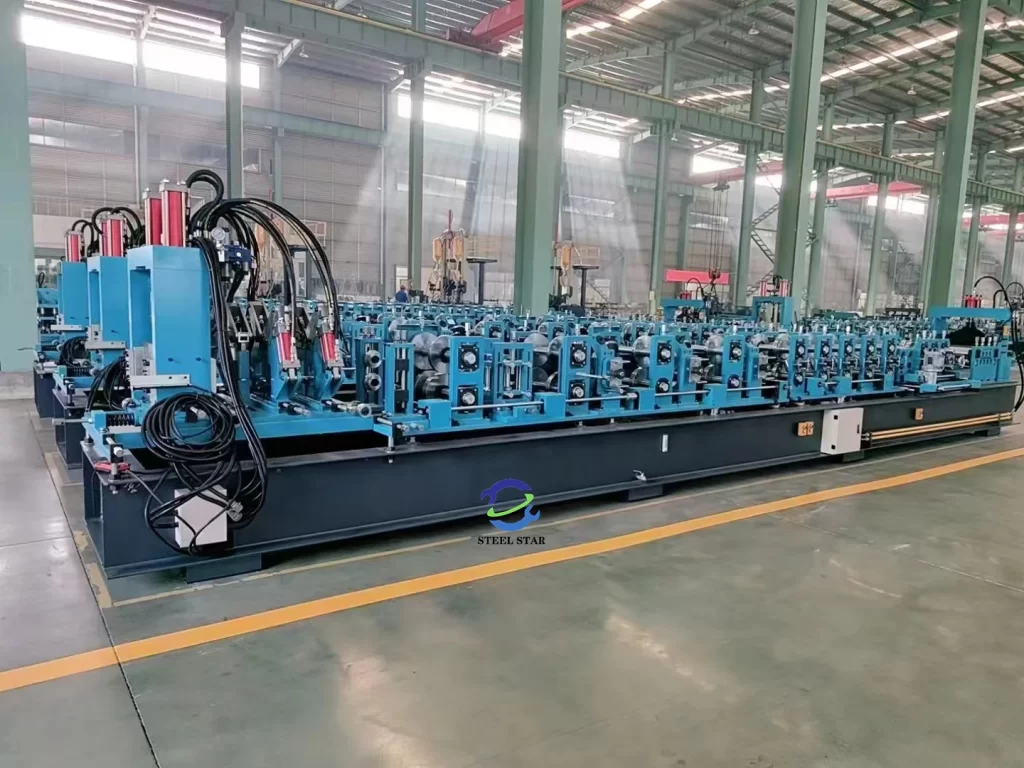
Machine Configuration and Components
Core System Architecture
- Uncoiling System
- Heavy-duty mandrel-type decoiler
- Hydraulic expansion for coil diameters up to 2000mm
- Integrated coil car for easy loading
- Tension control with pneumatic brakes
- Feeding and Leveling Unit
- 7-13 roll leveling mechanism
- Pre-straightening for material uniformity
- Servo-controlled feed system
- Edge guiding for precise alignment
- Roll Forming Station
- 12-22 forming stands (depending on material thickness)
- Progressive forming through carbide-tooled rolls
- Hardened alloy steel rollers (HRC 58-62)
- Quick-change roll system for profile switching
- Cutting System
- Hydraulic flying cut-off
- Programmable length control
- Dual-saw system for heavy-duty applications
- Burr-free cutting technology
- Output and Stacking
- Automatic run-out table
- Pneumatic counting system
- Bundle stacking mechanism
- Safety guards and covers
Technical Specifications
Production Capabilities
- Material Thickness: 1.0mm to 4.0mm
- Material Width: Up to 400mm coil width
- Profile Height: 80mm to 350mm
- Flange Width: 50mm to 100mm
- Production Speed: 12-25 meters per minute
- Cutting Accuracy: ±1.0mm
- Length Range: 1,500mm to 12,000mm
Material Compatibility
- Galvanized steel (GI)
- Pre-painted galvanized iron (PPGI)
- Aluminum-zinc alloy coated steel
- Stainless steel (special configurations)
- High-tensile structural steel
Advanced Features
Automation and Control
- PLC Control System: Siemens/Mitsubishi processors
- HMI Interface: 10-inch color touchscreen
- Precision Servo Drives: For cut-off synchronization
- Automatic Lubrication: Centralized oil circulation system
- Fault Diagnostics: Self-monitoring with alert system
Quality Enhancement Systems
- Pre-punching Unit (Optional)
- Bolt hole punching before forming
- Servo-controlled positioning
- Multiple hole pattern configurations
- Marking System
- Product identification
- Length marking
- Batch numbering
- Real-time Monitoring
- Production counter
- Speed display
- Error logging
- Maintenance scheduling
Applications in Construction
Primary Uses
- Industrial Buildings
- Factory structures
- Warehouse construction
- Logistics centers
- Commercial Structures
- Shopping malls
- Exhibition halls
- Sports arenas
- Agricultural Buildings
- Storage facilities
- Livestock shelters
- Processing plants
Structural Advantages
- High Strength-to-Weight Ratio: Optimized material usage
- Design Flexibility: Custom profiles for specific loads
- Fast Installation: Pre-engineered connections
- Cost Efficiency: Reduced labor and material costs
Selection Criteria
Key Considerations
- Production Requirements
- Annual output volume
- Profile size range
- Material specifications
- Operating schedule
- Technical Parameters
- Maximum material thickness
- Profile complexity
- Accuracy requirements
- Automation level needed
- Supplier Evaluation
- Manufacturing experience
- Technical support capability
- Spare parts availability
- Training provision
Installation and Operation
Site Requirements
- Floor Space: 30-50 meters length × 4-6 meters width
- Foundation: Concrete base with anchor bolts
- Power Supply: 380V/50Hz three-phase
- Air Supply: 0.6-0.8MPa compressed air
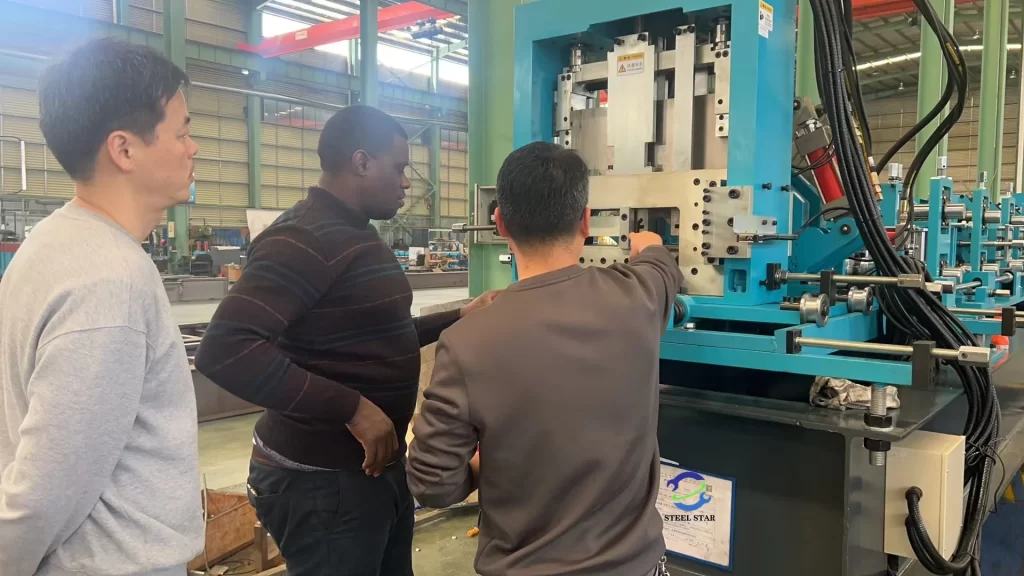
Training and Operation
- Basic machine operation training (5-7 days)
- Maintenance procedures
- Tooling changeover techniques
- Safety protocol implementation
Maintenance Protocol
Regular Maintenance Schedule
- Daily: Cleaning, visual inspection, lubrication check
- Weekly: Bolt tightening, alignment verification
- Monthly: Roll inspection, bearing examination
- Annually: Complete overhaul, calibration
Critical Spare Parts
- Forming rolls and shafts
- Cutting blades
- Hydraulic components
- Electrical components
- Drive system parts
Safety Features
Integrated Protection Systems
- Emergency stop circuits
- Safety light curtains
- Mechanical guarding
- Overload protection
- Electrical insulation
- Noise reduction enclosures
Economic Analysis
Cost-Benefit Factors
- Initial Investment: $80,000 – $300,000 (depending on configuration)
- Production Efficiency: 3-5 times faster than traditional methods
- Material Savings: 8-12% reduction in steel consumption
- Labor Efficiency: 60-70% reduction in manual labor
- ROI Period: Typically 18-36 months
Industry Trends
Technological Advancements
- Smart Manufacturing Integration
- IoT connectivity for remote monitoring
- Predictive maintenance capabilities
- Production data analytics
- Energy Efficiency
- Variable frequency drives
- Regenerative braking systems
- LED lighting implementation
- Enhanced Precision
- Laser-assisted alignment
- Real-time thickness monitoring
- Automated quality inspection
Environmental Considerations
Sustainable Features
- Energy-efficient motor systems
- Noise pollution control
- Scrap recycling mechanisms
- Compliance with ISO 14001 standards
- Reduced carbon footprint through optimized production
The modern CZ purlin roll forming machine represents the convergence of mechanical engineering, automation technology, and structural design principles. These sophisticated systems have transformed the construction industry by enabling the rapid, precise, and cost-effective production of essential structural components.
As global construction demands continue to evolve toward larger spans, higher efficiency, and sustainable practices, CZ roll forming technology is adapting with smarter controls, greater flexibility, and enhanced production capabilities. The future will likely see further integration with building information modeling (BIM) systems, advanced material handling automation, and AI-driven optimization of production parameters.
For manufacturers in the metal building components sector, investing in advanced CZ roll forming technology is not merely an equipment purchase—it’s a strategic decision that determines competitive positioning, production capability, and long-term business sustainability in an increasingly demanding global market.
Website:
www.greatforming.com (English)
www.arabicgreatforming.com (عربي)
www.russiangreatforming.com(Русский)
www.spanishgreatforming.com(Español)
www.frenchgreatforming.com(Français)
www.portuguesegreatforming.com(Portuguese)