

Finding the Right Decoiler for Your Production Line: A Buyer’s Guide
In the world of metal forming, stamping, and roll-forming, efficiency begins with the very first step: effectively unwinding and feeding coil stock. This is where a decoiler, also known as an uncoiler or payoff reel, becomes an indispensable piece of equipment. If you are in the market for a decoiler for sale, navigating the options requires a clear understanding of your needs and the available technologies. This guide will help you identify the right decoiler to enhance your productivity and material handling.
What is a Decoiler?
A decoiler is a machine that holds and dispenses coiled material—such as steel, aluminum, or other metals—in a controlled manner. It provides the initial feed into press lines, slitters, or processing units. The primary functions are to support the coil, allow it to unwind with minimal tension, and often to straighten the initial curve of the material.
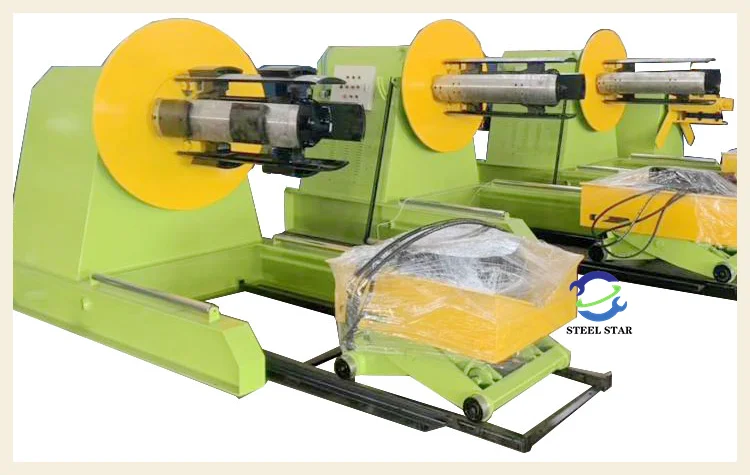
Key Types of Decoilers for Sale
When searching for equipment, you’ll encounter several designs, each suited to different applications:
- Cantilever Decoilers: The most common type, where the mandrel (the shaft that holds the coil) is supported only on one side. Ideal for quick coil changes and lighter to medium-weight coils. Perfect for many stamping and fabrication shops.
- Double-Supported Decoilers: Here, the mandrel is supported at both ends, providing superior stability for very heavy, wide, or dense coils. This design is essential for high-tension applications and heavy-gauge materials.
- Motorized Decoilers: Equipped with a drive motor to provide positive unwinding control. This is crucial for synchronized feeding with downstream equipment and for managing heavy coils that might otherwise overrun.
- Pneumatic or Hydraulic Decoilers: These use air or hydraulic pressure to expand the mandrel segments, gripping the coil securely from the inside. They offer excellent grip and are common in modern, automated lines.
- Reel Cradles or “No-Mandrel” Decoilers: Simple, cost-effective units where the coil rests on two rollers. Best for lighter-duty applications or where coil cores are inconsistent.
Critical Considerations Before You Buy
To select the best decoiler for sale, assess these parameters against your production requirements:
- Coil Capacity: Determine the maximum weight (e.g., 10 Ton), width (e.g., 1500mm), and inner/outer diameter (ID/OD) of the coils you process.
- Material Specifications: Consider the thickness (gauge) and yield strength of the material. Heavier, high-strength steel requires a more robust machine.
- Mandrel Type: Expansion mandrels (pneumatic/hydraulic) offer the best grip. Mechanical mandrels (with keys or wedges) are a simpler alternative. Ensure the mandrel fits your coil’s ID.
- Drive and Tension Control: Do you need a passive, drag-brake decoiler, or an active, motor-driven one for precise tension? Motorized models with variable frequency drives (VFDs) offer the most control.
- Supporting Equipment: Is the decoiler a standalone unit, or does it need to integrate with a straightener, feeder, or threading table? Consider a decoiler/straightener combo for space savings and streamlined feeding.
- Automation & Safety Features: Look for features like motorized width adjustment, hydraulic mandrel expansion, coil cars for loading, and safety cages or guards. These boost throughput and protect operators.
The Sourcing Landscape: New vs. Used
- New Decoilers: Offer the latest technology, full warranties, and customization options. They are the best choice for high-volume, precision-driven, or fully automated lines. Leading manufacturers provide engineering support to ensure perfect integration.
- Used Decoilers: Can represent significant cost savings for standard applications or tighter budgets. When evaluating a used decoiler for sale, inspect it thoroughly for wear on the mandrel, bearings, and drive components. Ensure its specifications match your needs and that spare parts are available.
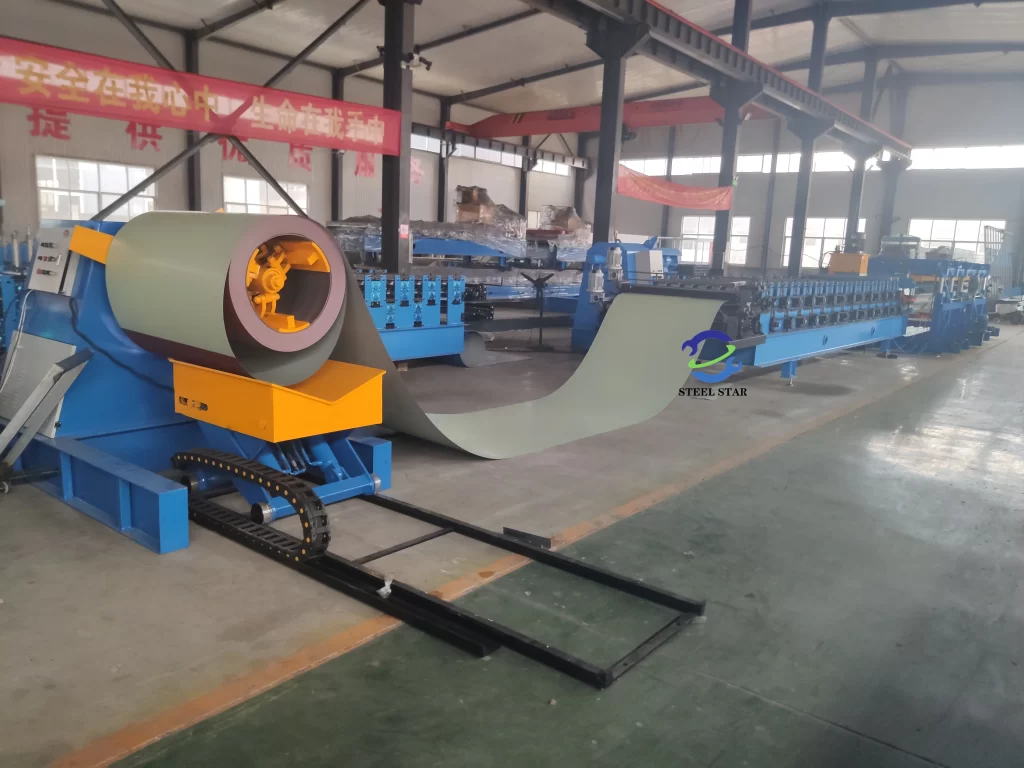
Investing in Operational Excellence
A well-chosen decoiler is more than just an unwinder; it’s the foundation of a smooth, efficient, and scrap-reducing production line. It minimizes downtime during coil changes, protects material from surface damage, and ensures consistent feeding for downstream processes.
Finding Your Match
Start by consulting with reputable machinery suppliers or manufacturers. Provide them with detailed specifications of your materials and desired output. Reputable sellers will offer site surveys, application advice, and after-sales support.
Whether you opt for a robust new model to anchor a future-proof line or a reliable used machine to optimize current costs, the right decoiler for sale is out there. By carefully defining your requirements and understanding the equipment options, you can make an investment that pays dividends in productivity, quality, and long-term reliability for your metal processing operations.
Website:
www.greatforming.com (English)
www.arabicgreatforming.com (عربي)
www.russiangreatforming.com(Русский)
www.spanishgreatforming.com(Español)
www.frenchgreatforming.com(Français)
www.portuguesegreatforming.com(Portuguese)