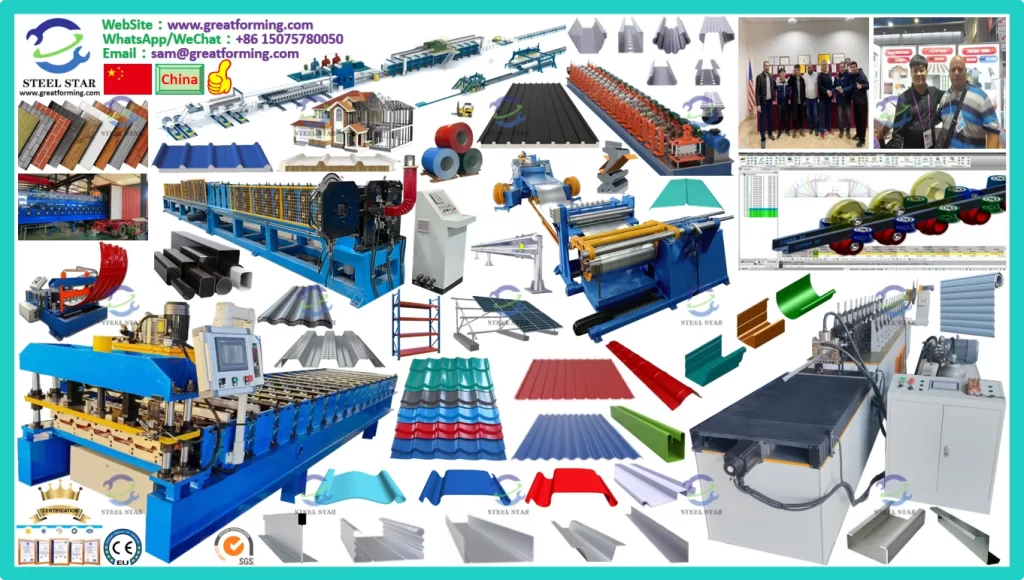


In the world of modern construction, speed, strength, and efficiency are foundational principles. The floor decking roll forming machine stands as a pivotal technology that embodies these ideals, serving as the production backbone for the ubiquitous steel floor decks and composite slabs found in commercial, industrial, and multi-story residential buildings worldwide.
Core Function and Significance
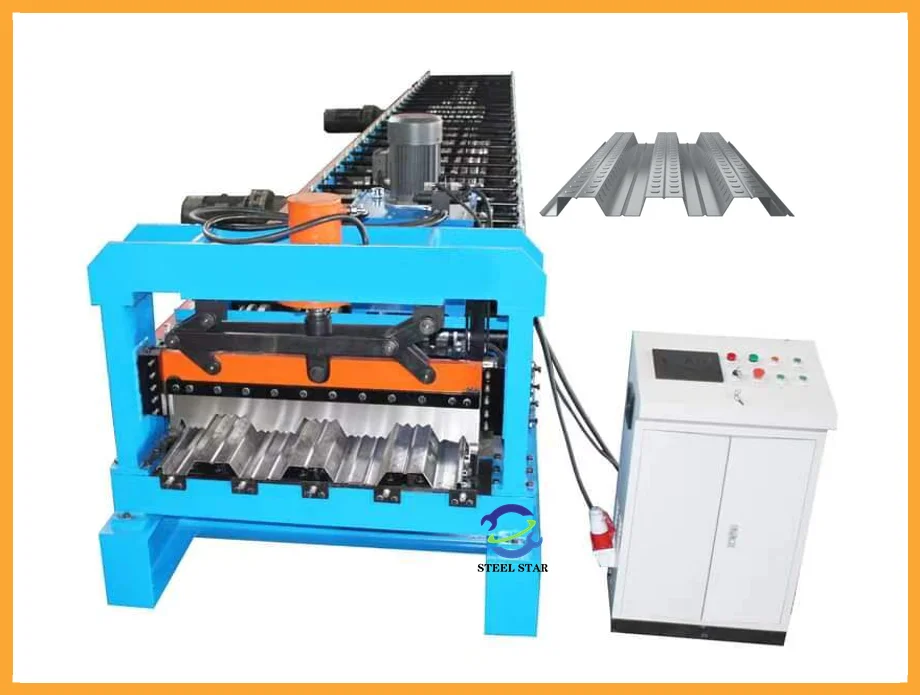
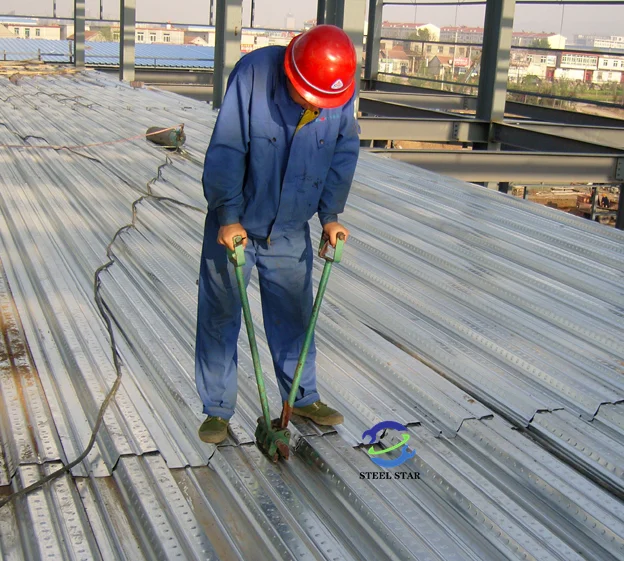
A floor decking roll forming machine is a highly specialized cold roll forming system designed to transform raw steel coil—typically galvanized or Galvalume—into precise, high-strength profiled decking panels. These panels serve a dual critical function: firstly, as a permanent formwork to support wet concrete during pouring and curing, and secondly, as tensile reinforcement within the finished composite slab, contributing significantly to its load-bearing capacity. The machine enables the rapid, continuous production of these essential components, directly fueling the fast-paced timeline of contemporary steel-framed construction.
The Precision Process: From Coil to Panel
The operation is a symphony of coordinated stages in a continuous production line:
Loading and Feeding: A large steel coil is mounted on a decoiler. The leading end of the strip is fed into the leveling unit, which removes any coil memory or curvature, ensuring perfectly flat material enters the forming process.
Pre-Punching and Notching (Critical Stage): Before profiling, the flat strip passes through a precision punching station. Here, embossments (dimples) are stamped into the steel. These are not merely decorative; they are engineered to create a mechanical shear bond with the concrete, enabling composite action. Pilot holes for screws or welding may also be added at this stage.
The Heart: Roll Forming Mill: The pre-punched steel strip then progresses through a series of roll stands, each equipped with matched sets of hardened steel rollers. Each stand incrementally bends the steel through a carefully calculated sequence until it achieves the final, complex decking profile. This profile includes longitudinal ribs for strength, wide flanges for bearing on supporting steel beams, and interlocking side laps for seamless panel connection.
Cut-to-Length: As the fully formed profile exits the final roll stand, a precise flying cut-off system—hydraulic shear or saw—cuts the continuous panel to the exact project-specified length without stopping the line. Control systems synchronize the cutter’s speed with the moving material.
Output and Handling: The finished deck panels are automatically conveyed, often stacked or bundled, ready for immediate shipment to the construction site.
Technical Advantages and Design Mastery
The use of roll forming technology offers compelling advantages for deck production:
Unmatched Speed and Volume: Continuous operation allows for production rates of 30-100 meters per minute, meeting the massive demands of large-scale projects.
Exceptional Consistency and Accuracy: Every panel is identical, with precise geometry ensuring perfect fit, easy installation, and predictable structural performance.
Material Efficiency and Strength: The cold-forming process work-hardens the steel at the bends, enhancing stiffness. Complex, weight-optimized profiles are produced with virtually no material waste.
Profile Versatility: A single machine, with quick-change roll cassettes, can often produce multiple deck profiles (e.g., dovetail, re-entrant, trapezoidal) and gauges, offering flexibility to manufacturers.
The machine’s design is a feat of engineering. It must handle high tensile forces with extreme rigidity to maintain profile tolerances. The roller die design is paramount, requiring sophisticated CAD/CAM modeling to ensure smooth, accurate metal flow. The integration and synchronization of the pre-punching unit with the forming line is also critical for dimensional accuracy.
Integration and Evolution
Modern floor decking lines are marvels of integration. They are governed by advanced PLCs and touch-screen HMIs, allowing operators to input panel length, quantity, and hole patterns. Servo-driven systems provide precision in punching and cutting. Some high-end lines incorporate automatic stacking, binding, and even in-line protective coating.
The floor decking roll forming machine is far more than a simple fabricator; it is an enabler of modern architectural ambition. By providing a fast, reliable, and economical method to produce a critical structural component, it directly contributes to shorter construction cycles, reduced labor costs, and the creation of stronger, lighter building systems. As construction methodologies advance toward greater prefabrication and efficiency, the role of this machine—and the continuous innovation behind it—remains firmly cemented at the core of industrial building technology.
Website:
www.greatforming.com (English)
www.arabicgreatforming.com (عربي)
www.russiangreatforming.com(Русский)
www.spanishgreatforming.com(Español)
www.frenchgreatforming.com(Français)
www.portuguesegreatforming.com(Portuguese)