

Highway Guardrail Roll Forming Machine Manufacturers: The Backbone of Road Safety Infrastructure
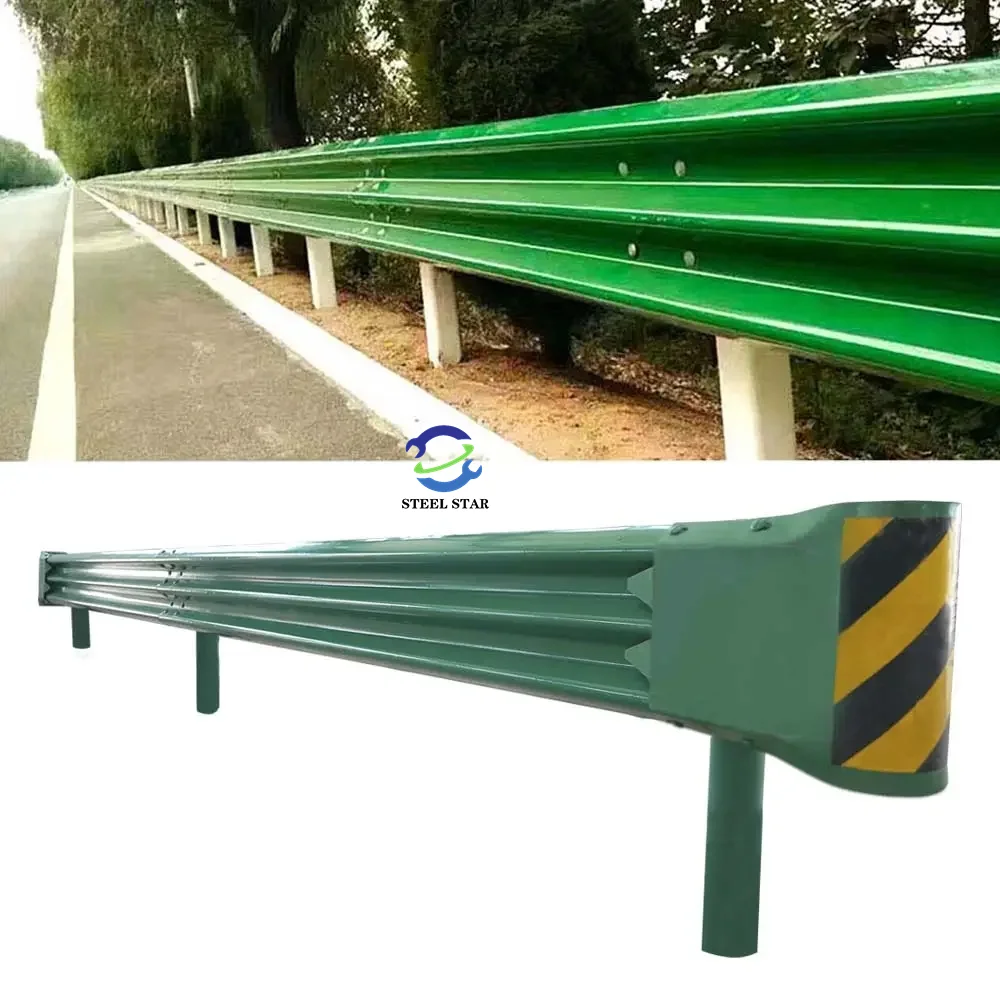
The humble highway guardrail, a ubiquitous sight along roadsides worldwide, plays a critical role in saving lives by preventing errant vehicles from leaving the roadway or crossing into opposing traffic. Behind these essential safety barriers lies a sophisticated manufacturing process, and at its heart is the highway guardrail roll forming machine. This specialized equipment transforms coils of raw steel into the precise, high-strength profiles that form modern guardrail systems. The manufacturers of these machines are, therefore, pivotal yet often unseen contributors to global transportation safety.
The Core Technology: What is a Guardrail Roll Forming Machine?
A guardrail roll forming machine is a continuous, automated production line designed to cold-form metal coils into long, consistent guardrail profiles. The process involves progressively shaping the steel strip through a series of precisely engineered roller dies. Unlike punching or stamping, roll forming applies gradual pressure, creating complex cross-sections without compromising the material’s structural integrity.
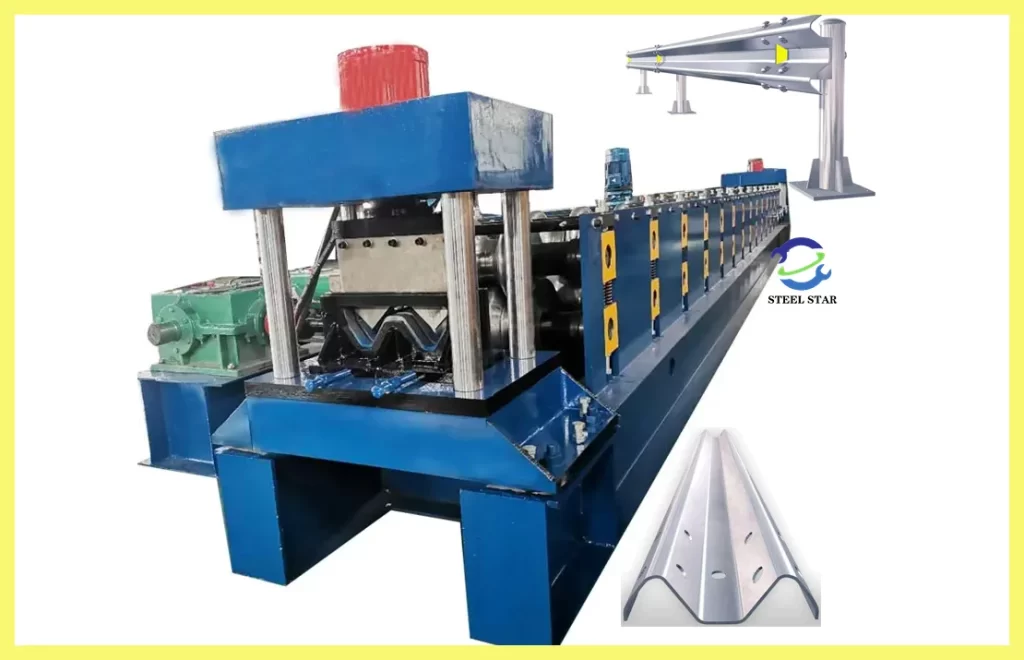
A complete production line typically integrates several key components:
- Decoiler & Feed System: Handles heavy steel coils (often galvanized or bare steel).
- Roll Forming Station: The core unit with multiple stands of rolls that sequentially shape the metal into profiles like the standard “thrie-beam” (three-wave) or “W-beam.”
- Punching & Notching Units: Hydraulic or servo-driven systems that punch holes for splicing and create end treatments at high speeds.
- Cut-off System: Accurately cuts the continuous formed rail to predetermined lengths.
- Control System: Advanced PLC and HMI interfaces for precision control over dimensions, speed, and punching patterns.
Key Capabilities of Leading Manufacturers
- Precision Engineering & Customization: Ability to design machines for various global guardrail profiles (W-beam, Thrie-beam, blockout sections) and adapt to specific national standards.
- High Production Efficiency: Modern lines can operate at speeds of 10-25 meters per minute, ensuring high output for large-scale infrastructure projects.
- Durability & Robustness: Machines are built from heavy-duty materials to withstand the constant stress of forming high-tensile steel, guaranteeing long service life and low maintenance.
- Integration of Automation: Incorporating servo-driven punching, automatic length measurement, and stacking systems to reduce labor and enhance consistency.
- Technical Support & Training: Providing comprehensive installation, calibration, and operational training, along with ready availability of spare parts and die sets.
The Global Landscape of Manufacturers
The market for guardrail roll forming machinery is global, with key players concentrated in regions with strong manufacturing bases:
- China: A major hub, home to numerous manufacturers offering a wide range from cost-effective standard lines to high-end, fully automated systems. Chinese companies have significantly advanced their technology and are dominant exporters, competing on both price and technical capability.
- Europe & North America: Host established engineering firms known for premium, highly automated, and durable machinery. They often focus on innovation, precision, and integration with Industry 4.0 concepts, catering to markets with stringent quality requirements.
- Other Regions: Significant manufacturers also exist in countries like Turkey, India, and South Korea, serving both domestic and regional markets.
Challenges and Innovations
Manufacturers face evolving challenges that drive innovation:
- Material Advancements: Adapting to newer, high-strength steel grades requires machines with greater forming power and roll die durability.
- Demand for Flexibility: Clients seek lines that can produce multiple profiles with quick changeovers to maximize versatility.
- Sustainability & Efficiency: Developing systems that minimize energy consumption, material waste (through optimized cutting), and noise.
- Digital Integration: Incorporating IoT sensors for predictive maintenance, real-time monitoring of production parameters, and data collection for quality assurance.
Choosing the Right Manufacturer
For a company investing in guardrail production, selecting the right equipment supplier is crucial. Key considerations include:
- Proven Track Record: Experience and references in producing reliable machines for the desired guardrail profiles.
- Compliance with Standards: Understanding of relevant safety and dimensional standards for the target market.
- After-Sales Service: The robustness of the support network for technical assistance, parts supply, and die refurbishment.
- Total Cost of Ownership: Evaluating not just the purchase price, but also operational efficiency, maintenance costs, and longevity.
Highway guardrail roll forming machine manufacturers are essential enablers of road safety infrastructure. Their engineering expertise translates safety standards into tangible, life-saving products. As global investment in transportation infrastructure continues, and safety specifications evolve, these manufacturers will remain at the forefront, innovating to produce more efficient, precise, and adaptable machinery. The next time you pass by a section of highway guardrail, it is worth remembering the complex technology and specialized industry dedicated to fabricating that simple, vital strip of steel.
Website:
www.greatforming.com (English)
www.arabicgreatforming.com (عربي)
www.russiangreatforming.com(Русский)
www.spanishgreatforming.com(Español)
www.frenchgreatforming.com(Français)
www.portuguesegreatforming.com(Portuguese)