

The Precision Slicer: An In-Depth Look at the Metal Slitting Machine
In the vast ecosystem of metal processing, efficiency and precision are the currencies of success. Before a steel coil can become a roof panel, a car frame, or a component of a household appliance, it must often be cut down to size. At the heart of this essential operation lies the Metal Slitting Machine, a sophisticated system that transforms wide master coils into multiple narrower strips with incredible speed and accuracy. This equipment is the silent workhorse of the metals industry, enabling manufacturers to maximize material utilization and customize coil widths for downstream applications .
What is a Metal Slitting Machine?
A metal slitting machine, also known as a slitting line or slitter, is a specialized production line designed to cut wide coils of metal—such as steel, aluminum, copper, or stainless steel—into narrower strips of predetermined widths . The process is continuous and highly efficient: a large parent coil is unwound, passed through a set of rotating circular knives that slice it longitudinally, and then the resulting multiple strips are rewound into separate, tight coils . This operation is fundamental to the supply chain for industries ranging from automotive manufacturing to construction and appliance production .
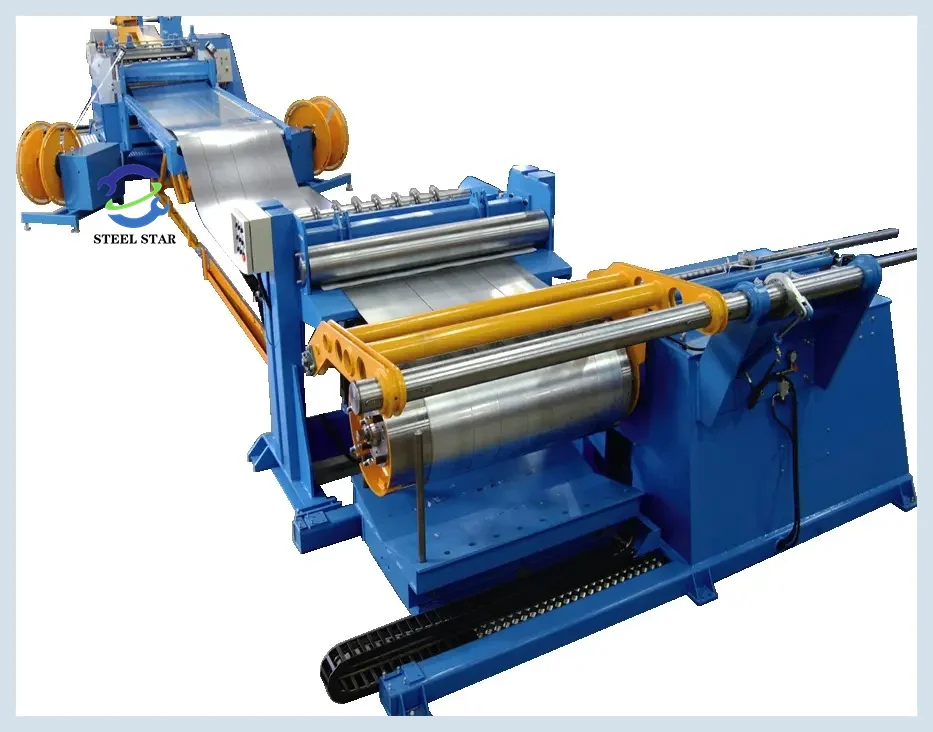
The Anatomy of a Slitting Line: Key Components
A modern metal slitting line is an integrated system of several sophisticated stations working in perfect harmony:
1. Uncoiler (Payoff)
The process begins here. A heavy coil of metal is loaded onto the uncoiler’s mandrel, which expands to grip the coil’s inner diameter. A hydraulic or electric drive system then unwinds the material, feeding it into the line under controlled tension to prevent loosening or telescoping . Advanced lines may feature dual uncoilers for continuous, “endless” operation.
2. Entry Equipment
Before slitting, the strip must be prepared. This section often includes a peeler/breaker to flatten the leading edge, a pinch roll to feed the material, and a crop shear to remove any damaged or irregular coil ends that could affect cut quality or cause jams .
3. Slitting Head (The Heart of the Machine)
This is where the actual cutting occurs. The slitter head contains two horizontal arbors (shafts)—one upper and one lower—that are mounted in a rigid, heavy-duty frame . These arbors hold multiple circular shear knives. The upper and lower knives work in pairs, offset slightly, to create a clean shearing action as the metal passes between them . The precision of these knives, their alignment, and the rigidity of the head determine the quality of the slit edges .
4. Knife Setup and Positioning
The configuration of the knives defines the width of the output strips. This can be achieved through:
- Packed Arbor: Using precisely ground spacers to position the knives, a method known for rigidity but slower to change.
- CNC Semi-Automatic: Advanced systems use probes to automatically measure and set knife positions and clearances at the push of a button, drastically reducing changeover time .
- Robotic Tooling Exchange: The most advanced lines utilize in-house developed robotic systems for rapid, fully automatic tooling changes, minimizing downtime and enabling flexible, just-in-time production .
5. Scrap Handling
As the coil is slit, the outermost edges are often trimmed away to remove imperfections and ensure a clean final product. These two narrow ribbons of scrap are diverted and either wound into tight bundles by scrap winders or chopped into small pieces by a scrap chopper for easy disposal .
6. Tensioning Device
Maintaining proper tension is critical for producing tight, straight coils. After slitting, the multiple strips pass through a tensioning station, which may use devices like a pad tensioner, bridle rolls, or an expanding mandrel to create back tension. This ensures the strips are wound evenly and securely on the recoiler .
7. Recoiler (Tension Reel)
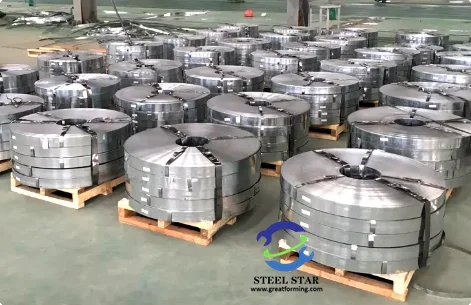
The final station is the recoiler, which winds the individual slit strips into separate finished coils. Modern recoilers feature automatic strip guiding, split or expanding mandrels for easy coil removal, and precise tension control to prevent telescoping (where the layers of the coil slide sideways) .
The Slitting Process: Step-by-Step
- Loading and Uncoiling: The master coil is loaded onto the uncoiler, and the leading end is fed into the line.
- Preparation: The crop shear squares off the leading edge, preparing it for threading through the slitter.
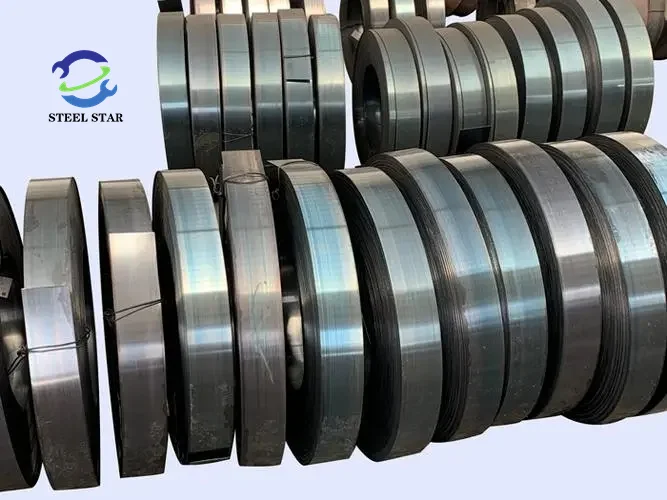
- Slitting: The strip passes through the slitter head, where the rotating knives make precise longitudinal cuts, dividing it into multiple narrower strips (often called “mults”) .
- Scrap Disposal: The trimmed edges are separated and sent to the scrap winder or chopper.
- Tensioning and Separation: The slit strips pass through the tensioning station, which also often includes separator discs or a “spreader” to physically separate the strips before they reach the recoiler.
- Rewinding: Each individual strip is wound under controlled tension onto the recoiler mandrel, forming tight, nested slit coils .
- Unloading: Once the desired coil size is achieved, the line is stopped, the finished coils are strapped or banded, and they are removed from the recoiler by an unloading car .
Advantages of Modern Slitting Technology
Precision and Quality
High-quality slitting lines deliver clean, burr-free edges with exceptional width tolerances, often as tight as ±0.05mm for thinner materials . Rigid slitter heads with minimal axial gap and exceptional concentricity ensure consistent, high-quality cuts across the entire strip .
High-Speed Productivity
Modern lines can operate at staggering speeds, with advanced systems reaching up to 800 meters per minute or even 1,000 feet per minute (305 m/min) . This high throughput, combined with rapid automated changeovers, maximizes production capacity and profitability.
Material Versatility
Slitting lines are engineered to handle an incredibly wide range of materials—from ultra-thin 0.07 mm aluminum foil for packaging to heavy 20 mm carbon steel plates for structural applications . They can process ferrous and non-ferrous metals, including coated, pre-painted, and annealed materials .
Reduced Installation Costs and Space Efficiency
Innovations in line design, such as low passline or floor-mounted slitters, have revolutionized installation. These systems operate at a lower height, eliminating the need for deep, expensive foundation pits and elevated walkways, which dramatically reduces installation costs and saves valuable factory floor space .
Enhanced Safety and Automation
Modern lines minimize manual intervention. Features like hands-free strip threading, automatic coil loading/unloading, and PLC-based controls with safety circuits keep operators away from moving machinery and reduce the risk of workplace injuries . Automated tooling setup systems also eliminate the need for operators to manually handle heavy knives and spacers .
Industry Applications
Metal slitting machines are indispensable across a vast array of sectors:
- Automotive Manufacturing: Producing precision-width coils for stamped body panels, chassis components, and structural parts .
- Construction and Building Materials: Slitting galvanized steel for roofing sheets, wall cladding, purlins, and guardrails .
- Welded Pipe and Tube Mills: Supplying precisely sized strips that are then roll-formed and welded into tubes and pipes .
- HVAC and Appliance Manufacturing: Creating components for ductwork, furnace casings, and appliance housings .
- Metal Service Centers: Offering coil slitting as a critical value-added service to their customers, processing a wide variety of materials and gauges .
- Electrical Industry: Slitting silicon steel for transformer laminations and electric motor cores
The metal slitting machine is far more than just a cutting tool; it is a precision engineered system that forms the backbone of the metal supply chain. By efficiently converting massive master coils into customized, ready-to-use widths, it empowers manufacturers to reduce waste, improve productivity, and meet the exacting demands of modern industry. From the immense speed of its operation to the microscopic precision of its cuts, the slitting line remains a cornerstone of metal fabrication, quietly enabling the creation of countless products that define our world .
Website:
www.greatforming.com (English)
www.arabicgreatforming.com (عربي)
www.russiangreatforming.com(Русский)
www.spanishgreatforming.com(Español)
www.frenchgreatforming.com(Français)
www.portuguesegreatforming.com(Portuguese)