

If you are interested in the product and want more information, please leave your information .

WeChat (China) : +86 15075780050
Email : sam@greatforming.com
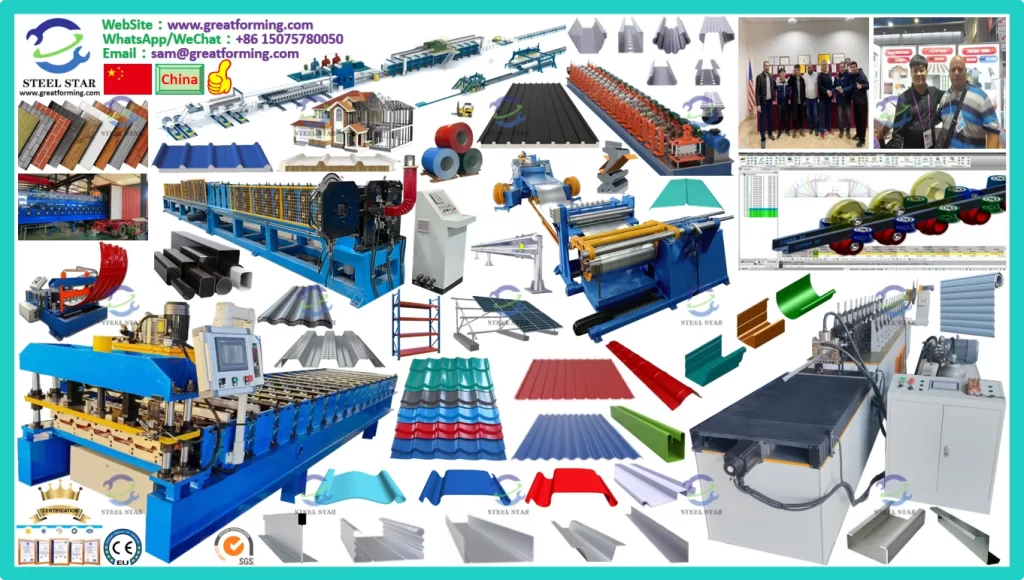
Below is a brochure of our factory products, which can be viewed and downloaded.
Roll forming is a type of rolling that involves continuously bending long strips of metal sheet (typically coiled steel) into the desired cross-section.
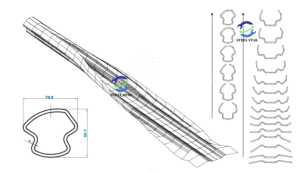
Design the mold shape and number of groups according to the required size. The shrinkage ratio of each group of cold bending is different. Through cold bending group by group, the final desired size can be achieved. Combined with electronic control system, hydraulic system, shearing system and counting encoder to realize automated operation.
Technical Parameters :
- Raw material width : 500mm — 1300mm (Can be customized according to your needs)
- Thickness of sheet : 0.8mm — 6mm (Can be customized according to your needs)
- speed : 5 m — 30 m/min (Can be customized according to your needs)
- Voltage : 380v 50hz 3phase / 220v 60hz 3phase (Can be customized according to your needs)
- Language : English / Spanish / Arabic / Russian / Portuguese / German / French (Can be customized according to your needs)
- Material of rollers : Gcr15 / Cr12 / Cr12 Mov (Can be customized according to your needs)
- Motor brand : Siemens / other (Can be customized according to your needs)
- Electronic control PLC : Siemens / Delta / other (Can be customized according to your needs)
- Number of roller rows: According to product design
Application Scenarios :
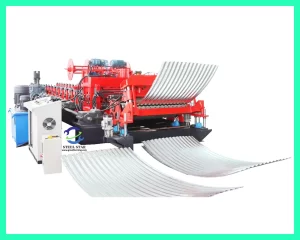
Equipment Production Line:
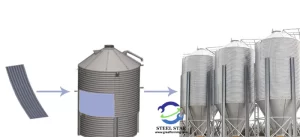
The Backbone of Modern Storage: An In-depth Look at Silo Roll Forming Machines
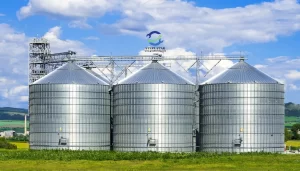
In the world of industrial agriculture, food processing, and bulk material storage, the silo is an iconic structure. These towering cylindrical giants are responsible for storing everything from grain and cement to plastic pellets and sawdust. While the silo itself is a simple concept, the machinery required to produce its corrugated, high-strength panels is remarkably sophisticated. At the heart of this manufacturing process lies the **Silo Roll Forming Machine**.
What is a Silo Roll Forming Machine?
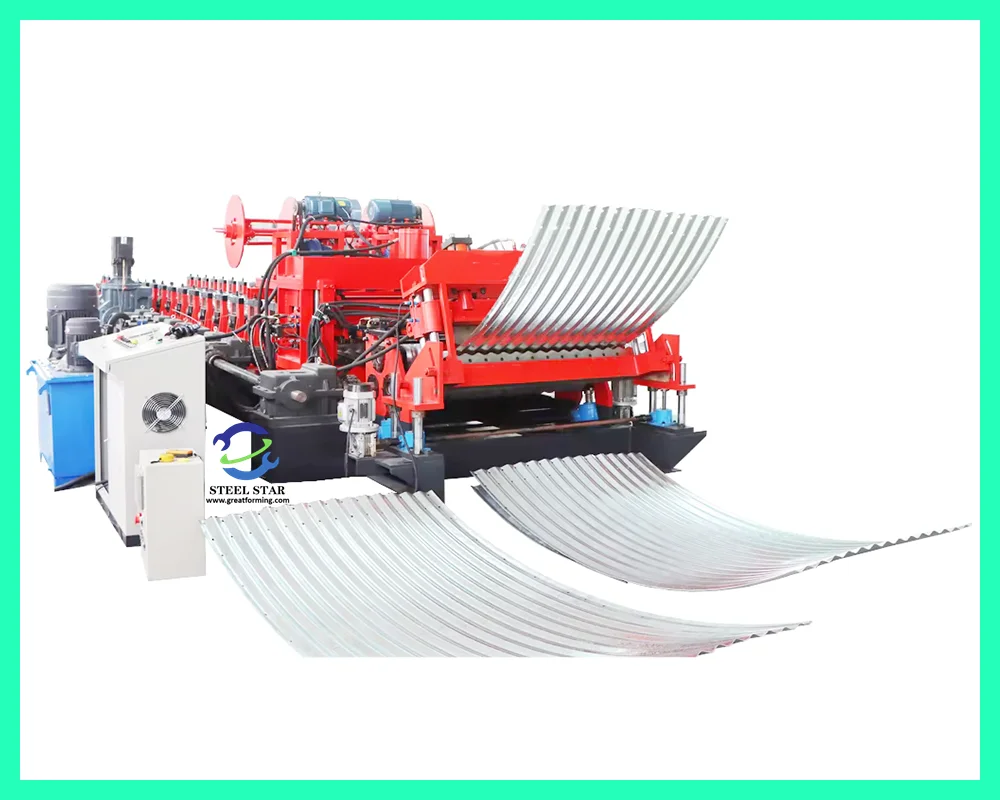
A silo roll forming machine is a specialized piece of industrial equipment designed to convert flat steel coils (typically galvanized iron, stainless steel, or weathering steel) into precise, curved, or flat panels used in the construction of silos.
Unlike standard roll formers that produce linear profiles for roofing or shelving, silo roll formers are engineered for **circular geometry**. The most advanced versions of these machines, often referred to as **”go-and-stop”** or **”cut-to-length and curve”** systems, do not just punch and cut the steel; they also perform the critical operation of **curling** the metal to a specific radius.
How the Machine Works
The manufacturing process for silo panels is a continuous flow of high-precision engineering. Here is a step-by-step breakdown of how a typical Silo Roll Forming Line operates:
1. Decoiling
The process begins with a heavy-duty decoiler (uncoiler) that holds a steel coil weighing anywhere from 5 to 15 tons. The coil is fed into the machine under controlled tension to ensure straightness.
2. Feeding & Leveling
A servo feeder and a pre-leveling unit correct any curvature left from the coil. Precision is critical here, as the final silo requires thousands of bolts to align perfectly across multiple rings.
3. Roll Forming
The core of the operation. The strip of metal passes through a series of progressive roller stations (usually between 18 and 24 stands). As it moves through the line, the steel is gradually bent into its final profile. The most common silo profiles include:
Corrugated (Wave) Profiles: For maximum structural rigidity.
Trapezoidal Profiles: Often used for smaller hoppers or specific structural elements.
Lipped Channel Profiles: Used for stiffeners.
4. Punching & Notching
This is a critical step. A hydraulic punching system (often servo-driven) precisely punches holes along the length of the panel. The accuracy of these holes determines whether the silo can be assembled correctly on-site. The machine punches holes for:
Vertical seams: Connecting panels to each other.
Horizontal flanges: Connecting rings (courses) of the silo.
Stiffener bolts: Attaching external reinforcement structures.
5. Cutting
Using a hydraulic shear, the machine cuts the panel to the precise length required for the silo’s circumference.
6. Curving (The Defining Feature)
Unlike standard roll formers, a silo roll forming machine utilizes a **curving unit**. After cutting, the flat panel is automatically fed into a set of three bending rolls. These rolls bend the panel into a specific radius that matches the diameter of the silo being built. For large silos (e.g., 20 meters in diameter), the curve is subtle; for small silos, it is aggressive.
7. Stacking
Finally, a servo stacker automatically collects and piles the finished, curved panels, ready for packaging and shipping.
Types of Silo Roll Formers
There are two primary configurations for these machines:
Stationary (Coil-Fed) Lines: These are massive, permanent installations found in manufacturing plants. They produce high volumes of standardized panels that are shipped to construction sites. This is the most common model for commercial silo manufacturers.
Mobile (On-Site) Roll Formers: This is a revolutionary niche in the industry. Instead of manufacturing panels in a factory and shipping them (which can be logistically challenging for large diameters), these machines are mounted on trailers and driven to the construction site. They take the steel coil directly to the location, forming and curving the panels on-site. This drastically reduces shipping costs and lead times for large agricultural or industrial projects.
Advantages of Using Silo Roll Forming Technology
1. Material Optimization
Roll forming is a cold-forming process that does not waste material (unlike laser cutting or stamping). It maximizes the yield from the expensive steel coil.
2. Structural Integrity
Cold working the steel increases its yield strength. Additionally, the ability to create deep corrugations without tearing the metal allows silos to withstand immense internal pressures (from grain loading) and external wind loads.
3. Precision
Silos often consist of 10 to 20 rings stacked vertically. If the bolt holes on the first ring are off by even 1 millimeter, the top ring will not align. Modern CNC (Computer Numerical Control) silo roll formers maintain tolerances within +/- 1.5mm over 30-meter lengths.
4. Speed
A high-quality silo roll forming line can produce one complete set of panels for a 10-meter diameter silo in under an hour, allowing manufacturers to keep up with high market demand.
Key Considerations When Purchasing
If you are in the market for a silo roll forming machine, consider the following:
Material Thickness: Can the machine handle the gauge of steel required for your market? (Typically 0.8mm to 6mm).
Profile Tooling: Is the machine dedicated to one profile, or can it be changed to produce different corrugation shapes?
Diameter Range: What is the minimum and maximum silo diameter the curving unit can accommodate?
Automation Level: Does the machine require manual adjustment for radius changes, or is it fully CNC with automatic radius calibration?
The Silo Roll Forming Machine is a testament to how specialized manufacturing equipment drives global industries. Whether it is a massive stationary line producing thousands of tons of storage capacity per month or a mobile unit building a silo in a remote rural location, these machines ensure that the essential task of storing bulk materials is done safely, efficiently, and economically.
As the demand for food security and bulk industrial storage continues to grow globally, the role of the silo roll former remains indispensable—transforming flat coils into the curved, protective shells that safeguard our resources.
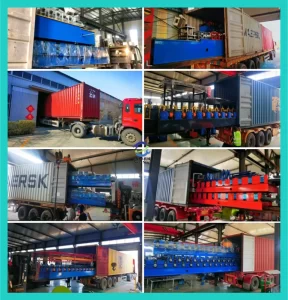
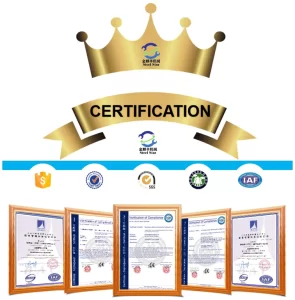
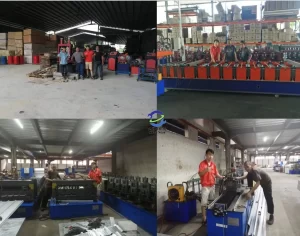
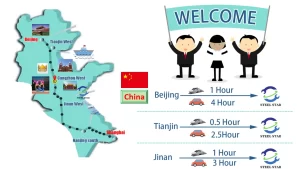
Factory Information:


Website:
www.greatforming.com (English)
www.arabicgreatforming.com (عربي)
www.russiangreatforming.com(Русский)
www.spanishgreatforming.com(Español)
www.frenchgreatforming.com(Français)
www.portuguesegreatforming.com(Portuguese)