

If you are interested in the product and want more information, please leave your information .

WeChat (China) : +86 15075780050
Email : sam@greatforming.com
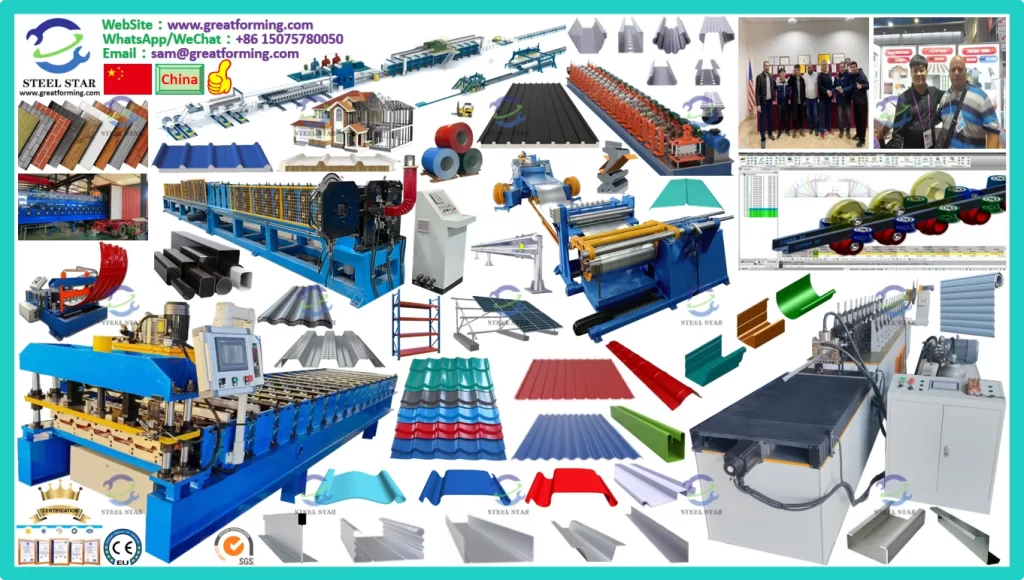
Below is a brochure of our factory products, which can be viewed and downloaded.
Roll forming is a type of rolling that involves continuously bending long strips of metal sheet (typically coiled steel) into the desired cross-section.
Design the mold shape and number of groups according to the required size. The shrinkage ratio of each group of cold bending is different. Through cold bending group by group, the final desired size can be achieved. Combined with electronic control system, hydraulic system, shearing system and counting encoder to realize automated operation.
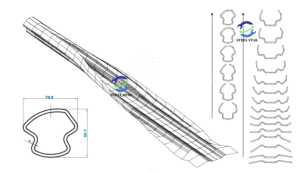
Technical Parameters :
- Raw material width : 500mm — 1250mm (Can be customized according to your needs)
- Thickness of sheet : 0.4mm — 0.8mm (Can be customized according to your needs)
- speed : 5 m — 30 m/min (Can be customized according to your needs)
- Voltage : 380v 50hz 3phase / 220v 60hz 3phase (Can be customized according to your needs)
- Language : English / Spanish / Arabic / Russian / Portuguese / German / French (Can be customized according to your needs)
- Material of rollers : Gcr15 / Cr12 / Cr12 Mov (Can be customized according to your needs)
- Motor brand : Siemens / other (Can be customized according to your needs)
- Electronic control PLC : Siemens / Delta / other (Can be customized according to your needs)
- Number of roller rows: According to product design
Application Scenarios :
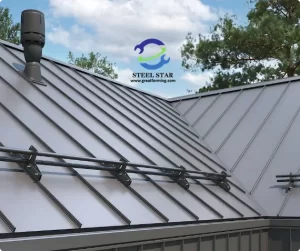
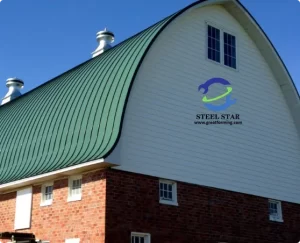
Equipment Production Line:
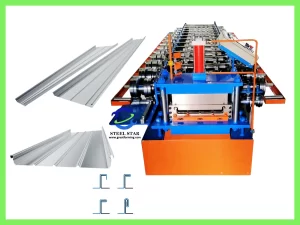
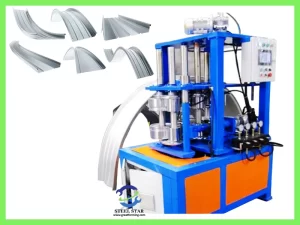
The Standing Seam Roll Forming Machine: A Comprehensive Guide to Modern Metal Roofing Production
In the world of metal roofing, precision, efficiency, and on-site flexibility have become paramount. At the heart of this evolution stands the **standing seam roll forming machine**—a specialized piece of equipment that has transformed how contractors and manufacturers produce high-quality metal roofing panels. This article explores what these machines are, how they work, and why they have become indispensable tools in the construction industry.
What is a Standing Seam Roll Forming Machine?
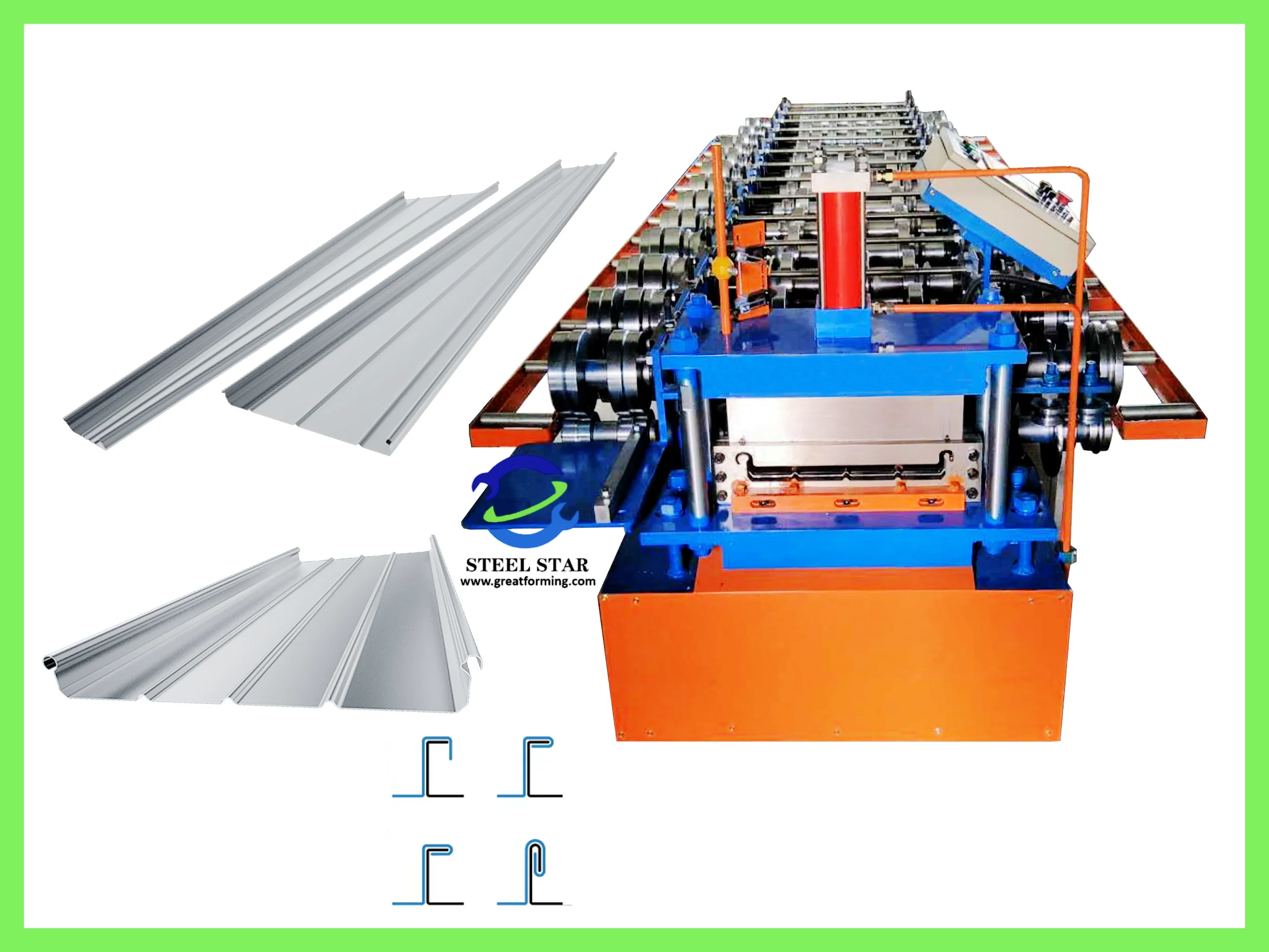
A standing seam roll forming machine is a piece of equipment designed to manufacture metal roofing panels with raised seams—known as standing seam profiles—from flat metal coil stock. The process, called roll forming, involves feeding a continuous strip of metal through a series of precision rollers that progressively shape the material into a finished panel with specific seam geometries.
These machines are distinguished by their ability to produce panels with **hidden fasteners**, a key feature that sets standing seam roofs apart from traditional exposed-fastener systems. The resulting panels interlock along their edges, creating a clean, weather-resistant surface that has become increasingly popular for both residential and commercial applications.
Types of Standing Seam Machines
Standing seam roll forming machines fall into two main categories, each serving different operational needs:
In-Plant Machines
In-plant standing seam machines are large-scale, stationary systems typically found at manufacturing facilities. These machines weigh approximately **15,000 lbs** and measure **20 to 30 feet in length**. They are designed for continuous mass production, capable of producing panels at speeds of **150 to 300 feet per minute**—and in some cases, up to 400 feet per minute.
Portable Standing Seam Machines
Portable standing seam machines, by contrast, are designed to be transported directly to job sites. These compact units typically weigh **4,500 to 5,500 lbs** and measure **12 to 15 feet in length**, making them transportable via trailer or large truck.
Portable machines fall into two subtypes:
Fixed-panel machines: Dedicated to producing a single profile type. While simpler and often more affordable, they lack flexibility for varied project requirements.
Multi-profile machines: Capable of producing multiple standing seam profiles by changing the roller tooling. Advanced models can accommodate up to **16 different profiles**, offering contractors significant versatility.
How Standing Seam Roll Forming Machines Work
The roll forming process transforms flat metal coil into finished standing seam panels through a systematic sequence:
1. Material Loading
The process begins with loading a coil of metal—typically galvanized steel, aluminum, copper, or pre-painted steel—onto a decoiler. The coil is fed into the roll forming machine where alignment guides ensure proper tracking through the system.
Material thickness capabilities vary by machine, with common ranges from **0.4mm to 0.8mm** for steel and up to **0.8mm for aluminum and copper**.
2. Progressive Roll Forming
As the metal moves through the machine, it passes through multiple forming stations—typically **8 to 16 sets of rollers**—each performing a small increment of the total shape change. This gradual approach ensures:
– Precise geometry without stressing the material
– Consistent seam dimensions across long panel runs
– Preservation of surface finish and coating integrity
3. Panel Length Control
Modern standing seam machines incorporate computerized controls that allow operators to preset panel lengths. Systems such as Siemens PLC controls with touch screen interfaces enable precise measurement and automatic cutting, achieving length accuracies of **±1mm over 4-meter panels**.
4. Cutting and Discharge
Once the panel reaches the specified length, integrated cutting systems—either hydraulic or electric—shear the material to size. Finished panels are then discharged onto roller tables for stacking or immediate installation.
Standing Seam Profiles: Snap Lock vs. Mechanical Seam
Standing seam machines can produce two primary types of seam profiles, each suited to different applications:
Snap Lock Panels
Snap lock panels feature pre-formed edges that simply snap together during installation without requiring special tools. This design enables faster installation and is typically suitable for roofs with a pitch of **3/12 or greater**.
Mechanical Seam Panels
Mechanical seam panels require specialized equipment to crimp the panel edges together. While this adds time and cost to installation, the resulting seam creates a tighter seal that performs exceptionally well on low-slope roofs (as low as **0.5/12**) and in regions with high wind or severe weather conditions.
Key Components and Specifications
Understanding the critical components of standing seam roll forming machines helps in selecting the right equipment:
| Component | Typical Specifications | Function |
|———–|———————-|———-|
| Forming Rollers | 45# steel, chrome-plated, 30-40 HRC hardness | Gradually shape metal profile |
| Roll Stations | 8-16 stages | Progressive forming sequence |
| Shaft Diameter | 45-75 mm | Transmit forming force |
| Main Motor Power | 4-15 kW | Drive the forming process |
| Production Speed | 10-30 m/min (portable) to 90+ m/min (industrial) | Output rate |
| Cutting System | Hydraulic or electric, Cr12 blades | Precision length cutting |
| Control System | PLC with touch screen, Siemens or Delta brands | Length control and automation |
Advantages of On-Site Roll Forming
Portable standing seam machines have gained popularity among contractors for several compelling reasons:
Reduced Logistics Costs
By producing panels directly at the job site, contractors eliminate the need to transport long, awkward panels from a manufacturing facility. This avoids the costs of flatbed delivery and reduces the risk of panel damage during transport.
Waste Minimization
On-site production allows panels to be cut to exact lengths as needed, significantly reducing scrap compared to ordering pre-cut panels that may require field modification.
Operational Control
Contractors gain complete control over panel quality and can quickly produce replacement panels if errors occur or if field conditions change—eliminating delays waiting for factory replacements.
Expanded Business Opportunities
Owning a standing seam machine enables contractors to not only serve their own projects but also produce panels for other contractors—a “chop and drop” service that can generate additional revenue during downtime.
Applications Across Industries
Standing seam roll forming machines serve diverse sectors beyond traditional roofing:
Agricultural Construction
Agricultural buildings such as barns, greenhouses, and storage facilities benefit from standing seam roofs for their durability and low maintenance requirements. Seam clips allow for thermal movement of panels, reducing stress and preventing leaks in large-span structures.
Residential and Commercial Projects
Standing seam roofs have gained popularity in residential architecture for their modern aesthetic and longevity. Commercial buildings and industrial facilities rely on these systems for robust performance under extreme conditions, with over **60% of new industrial buildings in North America** now using standing seam metal roofing systems.
Solar Energy Integration
The growing demand for renewable energy has created a significant market for standing seam clips that serve as non-penetrating mounting interfaces for photovoltaic (PV) racking systems. These specialized clips preserve roof integrity while enabling rapid deployment of solar arrays on existing metal roofs.
Technological Advancements
Modern standing seam roll forming machines incorporate sophisticated technology to enhance productivity:
CNC Control Systems
Contemporary machines feature CNC (Computer Numerical Control) systems with large color touch screens—typically **7 to 10 inches**—that provide intuitive interfaces for machine operation. These systems offer:
– Step-by-step operator guidance
– Automatic calculation of material requirements
– Program storage for frequent profiles
– Maintenance scheduling alerts
– Remote diagnostics via Wi-Fi or wired internet connections
Integrated Production Capabilities
Advanced machines combine multiple operations in a single platform. Some systems integrate:
– Roll forming with automatic punching
– Slitting capabilities for width customization
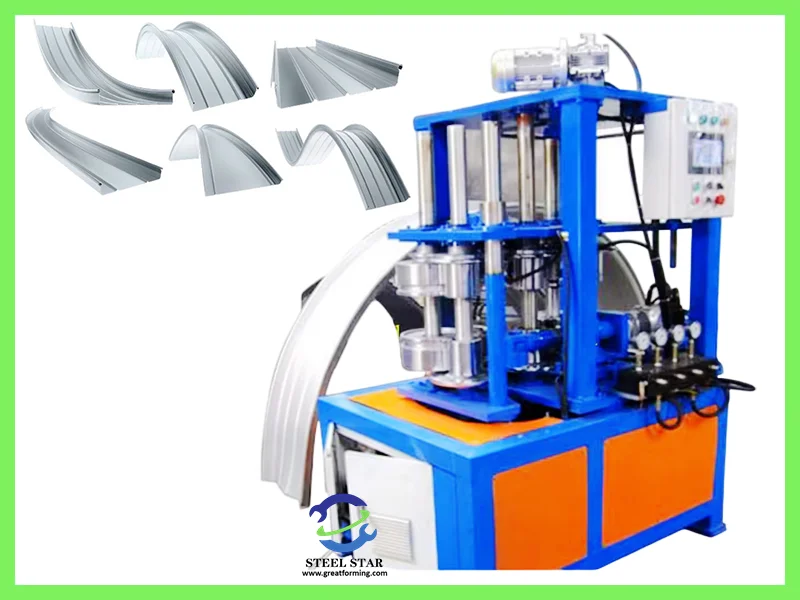
– Conical tray production for curved roof applications
– Automatic cycles for producing multiple trays without operator intervention
Maintenance Considerations
Proper maintenance ensures consistent panel quality and extends machine life:
Regular Inspections
– Check roller alignment and wear patterns
– Inspect cutting blades for sharpness
– Verify lubrication of moving parts
– Monitor electrical connections and control systems
Preventive Measures
– Clean material residue from rollers regularly
– Replace worn tooling before quality degrades
– Maintain proper tension on drive chains and belts
– Keep PLC and control systems updated
Return on Investment Considerations
For contractors considering purchasing a standing seam roll forming machine, the economic case often proves compelling:
Material cost savings: Eliminating distributor markups typically reduces material costs by 20-40%
Transportation elimination: Removing delivery costs for pre-manufactured panels
Waste reduction: Minimizing scrap through exact-length production
Labor efficiency: On-site production streamlines installation workflows
New revenue streams: Panel production for other contractors
The standing seam roll forming machine represents a convergence of precision engineering, manufacturing efficiency, and construction-site practicality. Whether deployed in large-scale manufacturing facilities or transported to residential job sites, these machines enable the production of high-quality metal roofing panels that combine aesthetic appeal with structural integrity.
For metal roofing professionals, the choice between in-plant and portable systems depends on business scale, project mix, and operational goals. What remains consistent across all applications is the fundamental value these machines deliver: control over material costs, panel quality, and installation timelines. As metal roofing continues to gain market share and building codes demand increasingly robust weather-resistant systems, the standing seam roll forming machine will remain an essential tool in the modern contractor’s arsenal.
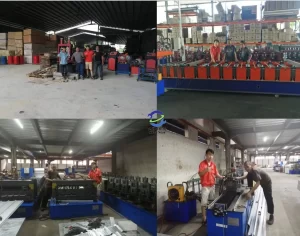
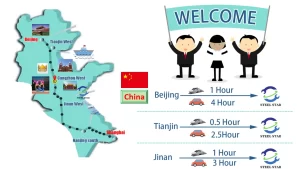
Factory Information:
Website:
www.greatforming.com (English)
www.arabicgreatforming.com (عربي)
www.russiangreatforming.com(Русский)
www.spanishgreatforming.com(Español)
www.frenchgreatforming.com(Français)
www.portuguesegreatforming.com(Portuguese)