

If you are interested in the product and want more information, please leave your information .

WeChat (China) : +86 15075780050
Email : sam@greatforming.com
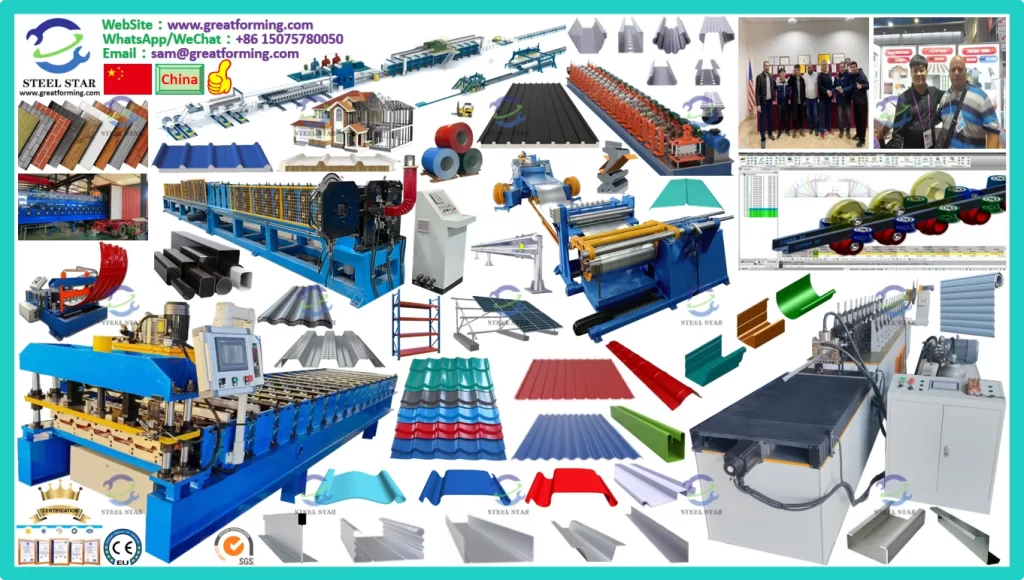
Below is a brochure of our factory products, which can be viewed and downloaded.
Roll forming is a type of rolling that involves continuously bending long strips of metal sheet (typically coiled steel) into the desired cross-section.
Design the mold shape and number of groups according to the required size. The shrinkage ratio of each group of cold bending is different. Through cold bending group by group, the final desired size can be achieved. Combined with electronic control system, hydraulic system, shearing system and counting encoder to realize automated operation.
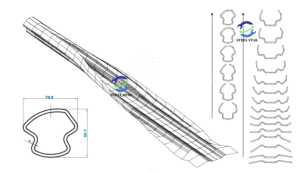
Technical Parameters :
- Raw material width : 500mm — 1300mm (Can be customized according to your needs)
- Thickness of sheet : 0.8mm — 6mm (Can be customized according to your needs)
- speed : 5 m — 30 m/min (Can be customized according to your needs)
- Voltage : 380v 50hz 3phase / 220v 60hz 3phase (Can be customized according to your needs)
- Language : English / Spanish / Arabic / Russian / Portuguese / German / French (Can be customized according to your needs)
- Material of rollers : Gcr15 / Cr12 / Cr12 Mov (Can be customized according to your needs)
- Motor brand : Siemens / other (Can be customized according to your needs)
- Electronic control PLC : Siemens / Delta / other (Can be customized according to your needs)
- Number of roller rows: According to product design
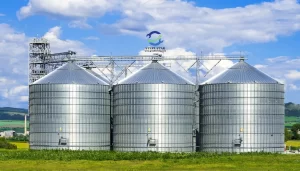
Application Scenarios :
Equipment Production Line:
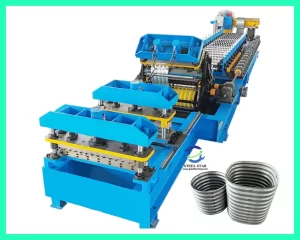
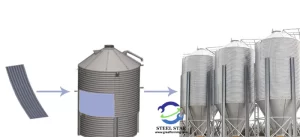
Engineering Strength Through Shape: The Steel Silo Corrugated Making Machine
In the landscape of modern agriculture and industrial storage, the steel silo stands as a symbol of efficiency and durability. These massive structures, often seen dotting rural horizons or lining industrial ports, are tasked with protecting valuable commodities—from grain and soybeans to cement and fly ash—against the elements. The defining feature of a modern steel silo is not just the material it is made from, but the **corrugated profile** that gives it strength.
Behind every one of these structures lies a specialized piece of equipment: the **Steel Silo Corrugated Making Machine**. This machine is the unsung hero of the storage industry, transforming flat steel coils into high-strength, curved panels that form the backbone of silo construction.
What is a Steel Silo Corrugated Making Machine?
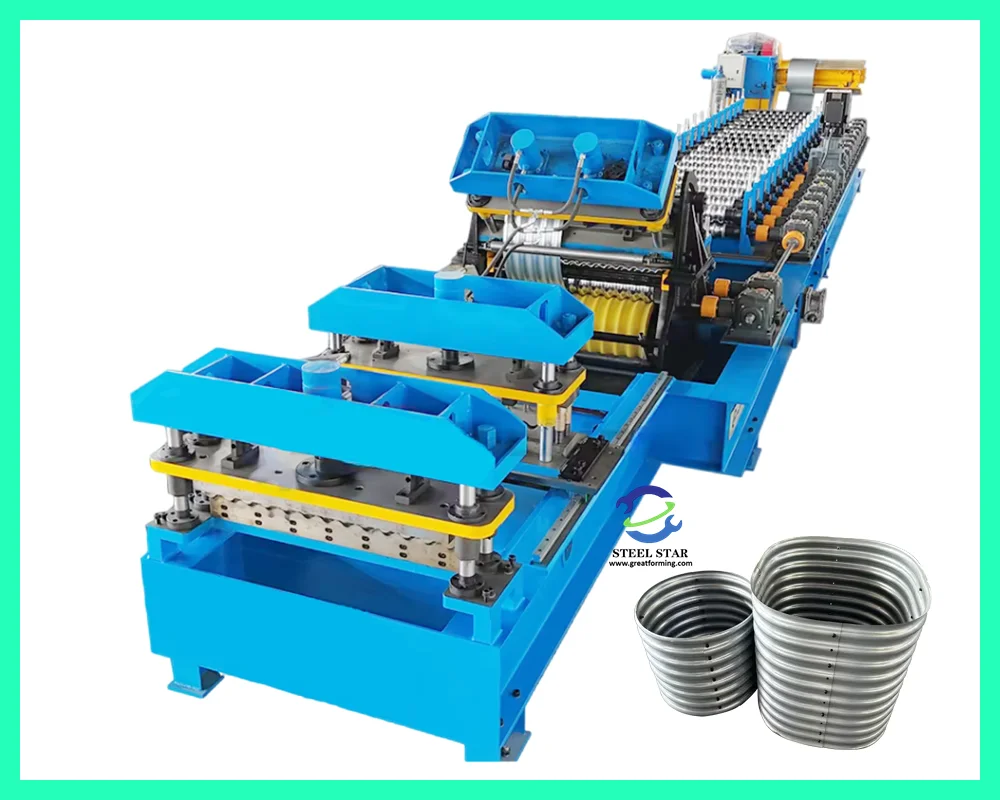
A steel silo corrugated making machine is a high-precision roll forming line specifically designed to manufacture the profiled steel panels used in bolted steel silo construction. Unlike standard roll formers that produce simple “U” or “C” channels, this machine is engineered to create deep, structural corrugations that significantly increase the strength-to-weight ratio of the steel sheet.
The machine typically combines several critical manufacturing processes into one continuous automated line: **decoiling, roll forming, punching, cutting, and curving**. The end product is a set of perfectly curved, pre-punched panels that can be bolted together on-site to form a silo of any specified diameter.
The Science of Corrugation
Why corrugation? The answer lies in structural mechanics. A flat sheet of steel is flexible and weak over long spans. However, by introducing a wave pattern (corrugation), the sheet gains immense rigidity along the axis perpendicular to the waves.
For silos, this is crucial. When a silo is filled with grain, the internal pressure pushes outward against the walls. The corrugated profile acts like a series of integrated stiffening ribs, allowing the silo to withstand these immense radial forces using relatively thin-gauge steel. This results in a structure that is:
Lighter: Easier to transport and erect.
Cost-effective: Uses less raw material than smooth-wall welded silos.
Durable: The corrugations allow for thermal expansion and contraction without stressing the bolt connections.
Key Components of the Machine Line
A fully automated steel silo corrugated making machine is a symphony of synchronized mechanical systems. Here are its core components:
1. Hydraulic Decoiler
The process begins with a heavy-duty uncoiler that holds the steel coil. These coils can weigh up to 10–15 tons. The decoiler features an expansion mandrel and a braking system to maintain consistent back tension, ensuring the steel feeds smoothly into the line without twisting.
2. Pre-Punching Unit (Hydraulic or Servo)
Before the steel is formed, the machine punches the necessary holes. Precision is paramount here. The punching unit creates:
– **Vertical flange holes:** For bolting panels together side-by-side.
– **Horizontal flange holes:** For stacking rings (courses) on top of each other.
– **Stiffener holes:** For attaching external reinforcing structures.
High-end machines utilize servo-driven punching systems that allow for variable hole patterns, enabling the production of panels for different silo diameters on the same machine without changing tooling.
3. Roll Forming Station
This is the heart of the machine. The flat strip passes through a series of progressive roller stands (typically 18 to 24 stations). Each stand performs a small, incremental bend. By the time the steel exits the final stand, the flat strip has been transformed into a precise corrugated profile. Common profiles include:
Deep Wave (6-inch/152mm depth): For heavy-duty industrial silos.
Standard Wave (4-inch/102mm depth): For agricultural grain silos.
Trapezoidal: For specific structural applications or hopper sections.
4. Hydraulic Shear
Once the required length is achieved (calculated based on the silo’s circumference), a high-speed hydraulic shear cuts the panel cleanly to size. The cut is synchronized with the punching pattern to ensure that the bolt holes align perfectly at the vertical seam during assembly.
5. Curving Unit (3-Roll Bending)
A feature that distinguishes this machine from standard roll formers is the curving unit. After forming and cutting, the flat corrugated panel is fed into a set of three precision bending rolls. These rolls progressively bend the panel to a specific radius matching the target silo diameter. The curvature is calculated so that when the panels are bolted together, they form a perfect circle.
6. Automatic Stacker
To streamline production, an automatic stacking system collects the finished, curved panels. This system ensures that panels are neatly piled for easy forklift removal and shipping, reducing manual labor and the risk of damage.
Types of Machines: Stationary vs. Mobile
The steel silo corrugated making machine market is divided into two main categories, each serving a distinct business model:
Stationary Factory Lines
These are permanent installations in manufacturing facilities. They are designed for high-volume production and can run continuously. They are ideal for manufacturers who produce standardized silo components for inventory or export. These machines typically offer higher speed (up to 12–15 meters per minute) and heavier material handling capacity.
Mobile On-Site Roll Formers
A significant innovation in the industry, mobile silo roll formers are mounted on trailers and transported directly to the construction site. Instead of manufacturing panels in a factory and shipping them (which can be cost-prohibitive for large diameters), the machine takes the steel coil to the field.
Advantages of mobile units:
Eliminates shipping of air: No need to transport empty, curved panels over long distances.
Reduces lead time: Panels are made on demand as the foundation is being prepared.
Lower logistics costs: Only the flat steel coil and the machine need to be transported.
Technical Specifications to Consider
When evaluating a steel silo corrugated making machine, manufacturers should consider the following parameters:
Specification | Typical Range | Importance |
**Material Thickness** | 0.8 mm – 6.0 mm | Determines the load capacity of the silos you can build.
**Coil Width** | 500 mm – 1300 mm | Affects the width of the panel and the number of seams per ring.
**Corrugation Depth** | Up to 150 mm | Deeper corrugations allow for greater silo diameters and higher storage densities.
**Silo Diameter Range** | 3 m – 27 m | The curving unit’s adjustability defines the range of projects you can undertake.
**Main Power** | 30 kW – 110 kW | Indicates the machine’s capacity to handle heavy-gauge, high-strength steel (e.g., S350, S450, or even S550GD). |
Advantages of Automation
Modern steel silo corrugated making machines are controlled by advanced **PLC (Programmable Logic Controller)** systems with HMI (Human-Machine Interface) touch screens. This automation offers:
Recipe Management: Operators can save profiles for different silo diameters. Switching from a 5-meter diameter silo to a 15-meter diameter silo is as simple as selecting a new file; the machine automatically adjusts punching patterns and curving radii.
High Precision: CNC control ensures bolt hole tolerances within +/- 1 mm over the entire length of the panel. This guarantees smooth assembly on-site, where panels often need to align across 10 or more vertical rings.
Labor Reduction: One operator can manage the entire line, from decoiling to stacking, reducing labor costs and human error.
The **Steel Silo Corrugated Making Machine** is far more than just a roll former; it is a complete manufacturing ecosystem that defines the quality and efficiency of modern silo construction. By combining the structural integrity of deep corrugation with the precision of CNC automation and the flexibility of on-site curving, these machines enable manufacturers to build storage solutions that are stronger, faster to erect, and more cost-effective than traditional concrete or welded steel alternatives.
As global demand for grain storage and industrial bulk handling continues to rise, the ability to produce high-quality corrugated silo panels efficiently will remain a critical competitive advantage. Whether in a fixed factory setting or a mobile field operation, this machine remains the indispensable tool for turning flat steel into the curved, resilient shells that protect our world’s essential resources.
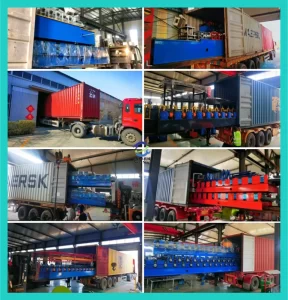
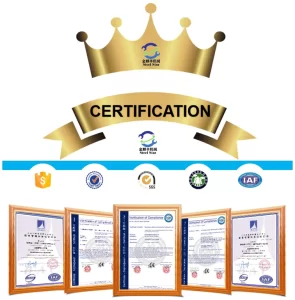
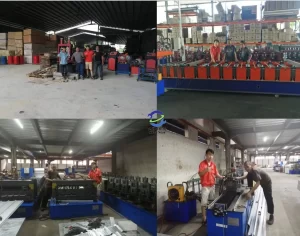
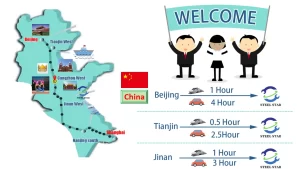
Factory Information:


Website:
www.greatforming.com (English)
www.arabicgreatforming.com (عربي)
www.russiangreatforming.com(Русский)
www.spanishgreatforming.com(Español)
www.frenchgreatforming.com(Français)
www.portuguesegreatforming.com(Portuguese)